







What Size Fireplace Grate Do I Need
Posted by Anna William on Aug 7th 2026
If you burn wood at home, sooner or later you will ask, "What size fireplace grate do I need for my firebox?" Here is the quick answer: for a traditional masonry wood-burning fireplace designed to accept an aftermarket grate, allow about 3 inches of clearance around the grate on each side. Measure your firebox width and depth, then subtract roughly 6 inches from each measurement to determine the maximum grate footprint that should fit properly. Always compare these measurements with the actual grate dimensions before purchasing. Below, we walk you through the exact steps, share a handy size chart, and help you pick the right build so your fires burn hotter and cleaner.
Table of Contents
- What Is a Fireplace Grate?
- What Size Fireplace Grate Do I Need? The Simple Formula
- Fireplace Grate Measurement Guide
- How to Measure Your Firebox Step by Step
- Grate Height, Bar Spacing, and Shape
- Cast Iron vs. Steel: Which Grate Material Is Best?
- Log Grate vs. Log Rack vs. Fire Basket
- Common Grate-Sizing Mistakes to Avoid
- Find the Right Fireplace Grate at Embers Living
- Frequently Asked Questions
What Is a Fireplace Grate?
What exactly is a fireplace grate, then? It is a raised metal frame, usually cast iron or steel, that lifts your logs up off the floor of the firebox. A small amount of lift accomplishes a lot of work.
When your wood sits up on a grate, air flows under and around it. Better airflow means a hotter, more complete burn and less smoke. Ash falls through the bars instead of smothering the coals, so your fire stays lively and cleanup gets easier. The grate also protects the floor of your firebox from constant high heat.
Do you need one? A fireplace grate can be helpful in a traditional masonry wood-burning fireplace because it raises logs off the hearth and allows airflow underneath the fire. However, not every wood-burning fireplace or insert is designed for an aftermarket grate. Always check your fireplace manufacturer’s instructions before adding or replacing a grate.
Gas fireplaces are different. Never place a standard wood-burning grate inside a gas fireplace. Use only the burner, grate, and log components approved by the manufacturer.
What Size Fireplace Grate Do I Need? The Simple Formula
The majority of people make mistakes in this area, but it's actually quite simple. Your grate needs clearance around the firebox to allow proper airflow and ensure a safe fit. For many traditional masonry fireplaces, a common guideline is approximately 3 inches of clearance around the sides, front, and back of the grate.
That gives you a clean two-step rule:
- Maximum grate width = firebox width minus about 6 inches
- Maximum grate depth = firebox depth minus about 6 inches
Here is a worked example. Say the back of your firebox measures 26 inches wide and the floor is 23 inches deep. Take 6 inches off each number. You land on a grate that is about 20 inches wide and 17 inches deep. That grate will sit centered with room to spare on all sides.
Why does the clearance matter so much? Air needs to move around the fire to feed it oxygen. Crowd the walls, and you choke the burn and trap heat against the masonry. Leave that clearance, and you provide space for airflow, easier fire maintenance, and proper separation between the grate and firebox walls.
Fireplace Grate Measurement Guide
Still asking what size grate for fireplace openings like yours calls for? Use this quick chart. Measure your firebox opening width, then read across. Your ideal fireplace grate measurement is based on your firebox, not the room around it.
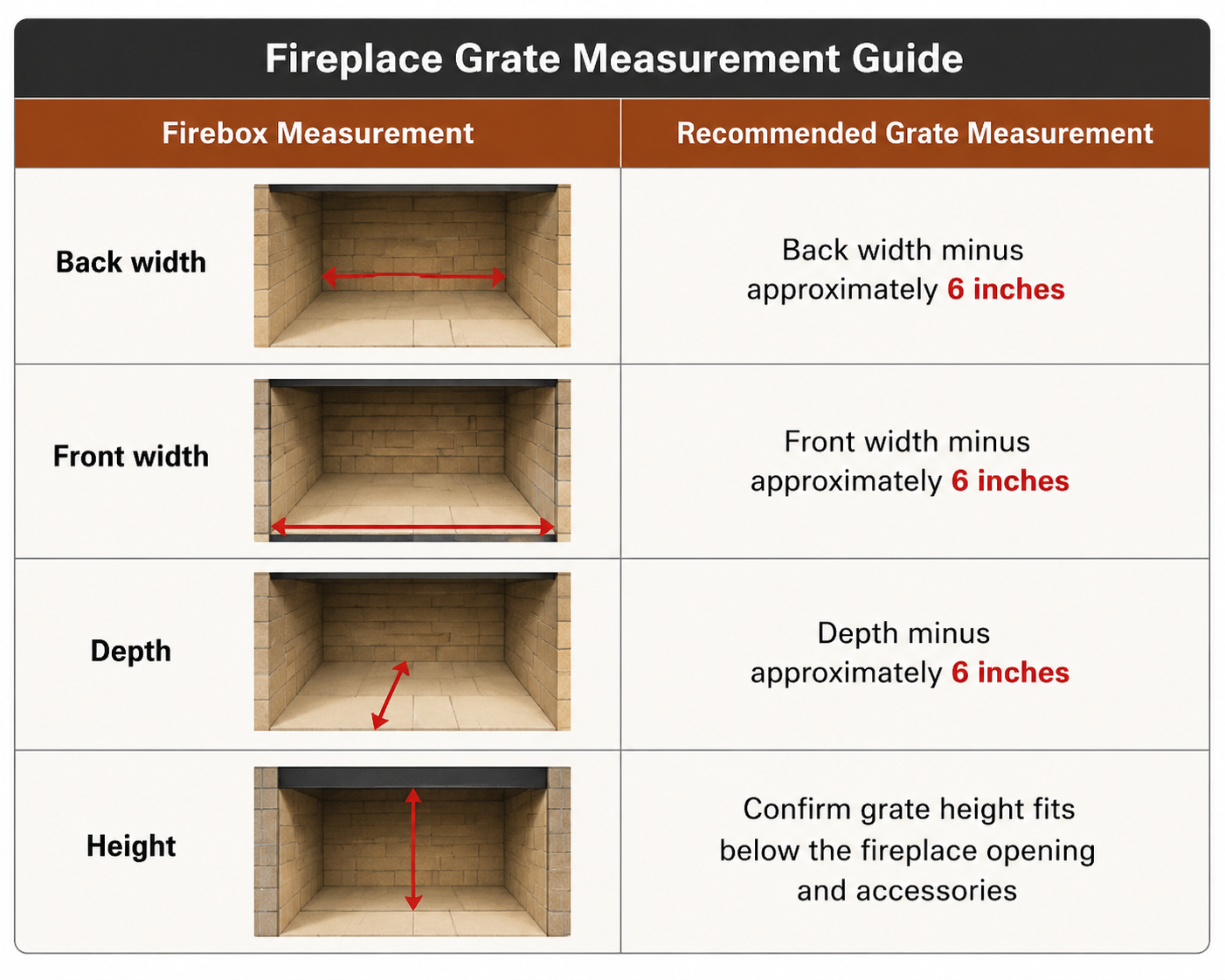
One caution. The rear wall of many masonry fireboxes is narrower than the front because they are tapered. Always size to the back width, because that is the tightest spot. If you size to the wide front opening, your grate may not clear the side walls at the rear.
How to Measure Your Firebox Step by Step
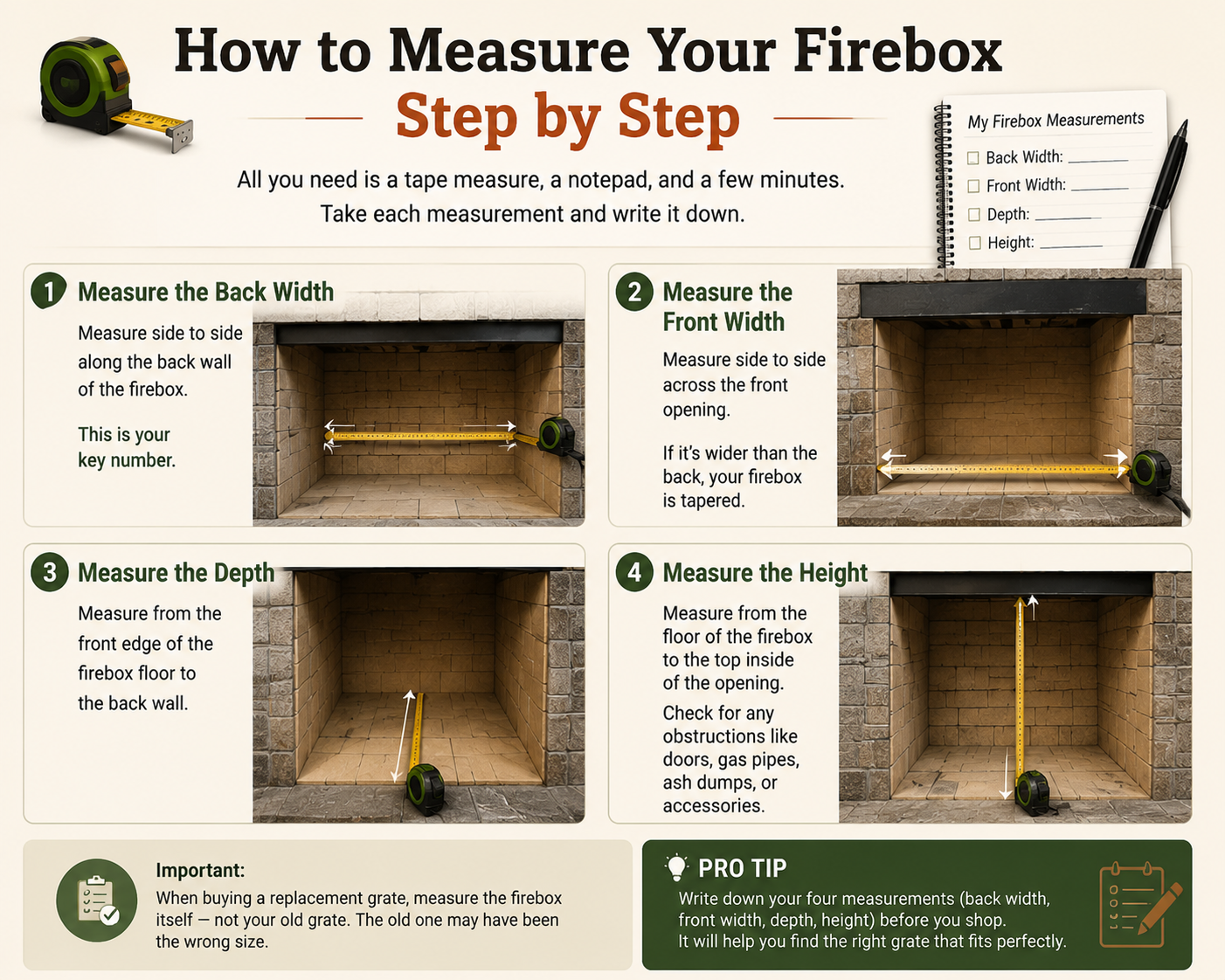
All you need is a piece of paper and a tape measure. Take your time and write each number down.
- Measure the back width. Move your tape side to side along the firebox's back wall. Your key number is this.
- Measure the front width. Do the same across the front opening. If it is wider than the back, your firebox is tapered.
- Measure the depth. Measure the distance between the firebox floor's front edge and the back wall.
- Measure the height. Check the available height inside your firebox and consider any obstructions, such as fireplace doors, gas starter pipes, ash dumps, or other accessories.
Buying a replacement? Measure the firebox itself, not your old grate. The old one may have been the wrong size all along, and that is often why folks come to us in the first place.
A quick tip from years on the sales floor: jot your four numbers on your phone before you shop. With widths, depth, and height in hand, you can rule out any grate that will not fit in seconds. It saves you a return and a cold weekend without a fire.
Grate Height, Bar Spacing, and Shape
Size is more than width and depth. A few other details shape how well your fire performs.
Height lifts the logs higher for more airflow, which helps in deeper fireplaces. Just keep the top of the fire well below the lintel and damper so heat and flame clear the opening safely.
Bar spacing matters too. Bars set close together hold smaller splits and kindling without letting them roll off or drop embers to the hearth. Wider gaps suit big logs. For everyday burning, a tighter bar layout is more forgiving.
Shape is the last piece. Flat, rectangular grates are the classic choice and fit most fireboxes. Bowed or basket styles cradle the wood and keep it centered. A self-feeding grate is angled so logs roll down toward the fire as they burn, which stretches the time between reloads.
Cast Iron vs. Steel: Which Grate Material Is Best?
The two main choices are cast iron and steel, and both are solid picks.
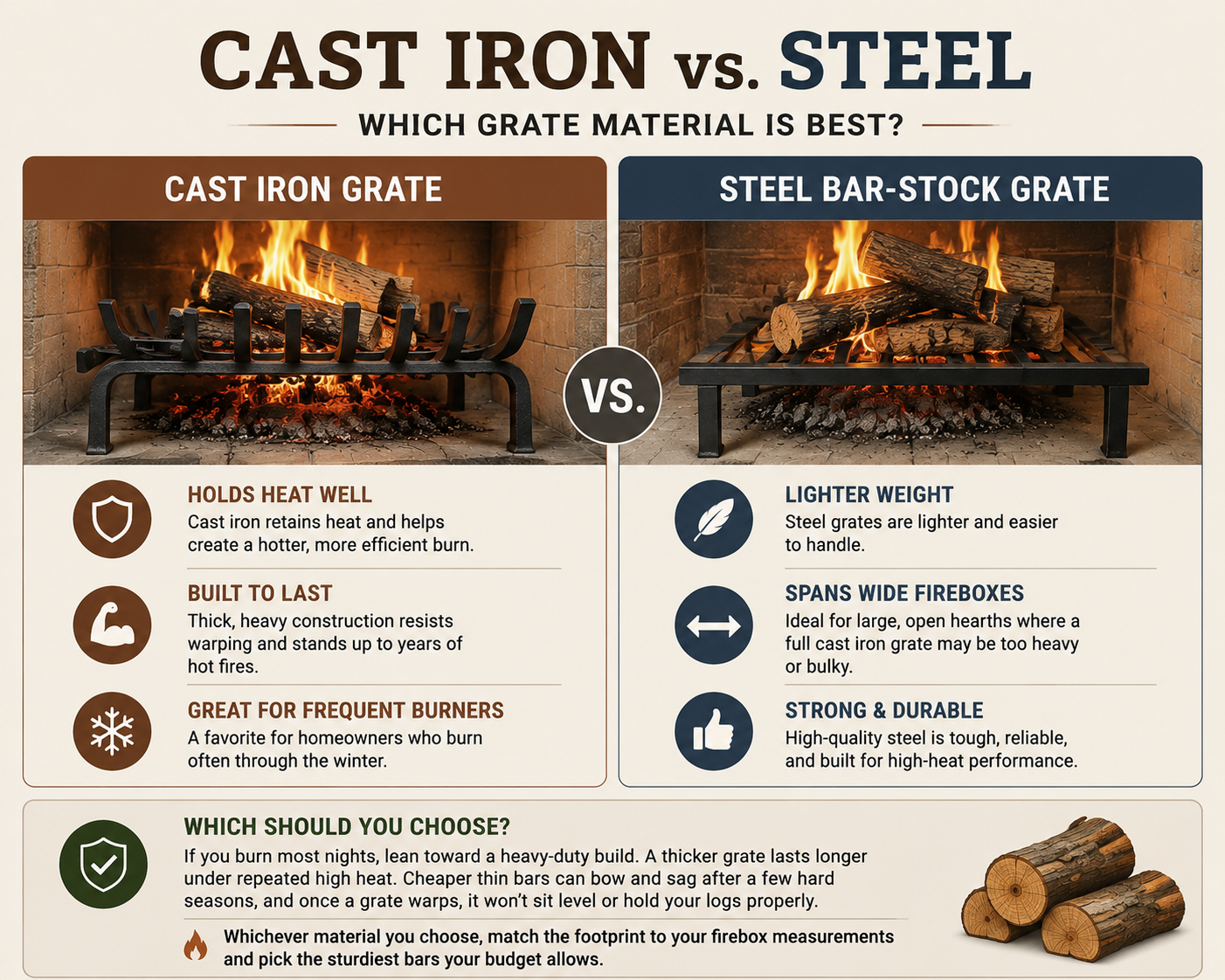
A cast-iron fireplace grate holds heat well and stands up to years of hot fires. The thick, heavy build resists warping, which makes it a favorite for anyone who burns often through the winter.
A steel bar-stock grate is lighter and often spans very wide fireboxes with fewer bars. Steel is a great fit for big open hearths where a full cast-iron unit would be tough to move.
If you burn most nights, lean toward a heavy-duty build. A thicker grate simply lasts longer under repeated high heat. Cheaper thin bars can bow and sag after a few hard seasons, and once a grate warps, it stops sitting level and holding your logs the way it should. Whichever material you choose, match the footprint to the measurements you took above and pick the sturdiest bars your budget allows.
Log Grate vs. Log Rack vs. Fire Basket
These names get mixed up all the time, so let us clear it up.
A fireplace log grate is the frame that holds your burning logs inside the firebox, up off the floor. That is the piece you have been sizing in this guide.
A fireplace log rack is different. It is a storage stand that holds your firewood neatly beside the hearth, keeping splits off the ground and ready to burn. It never goes inside the fire.
A fire basket is a deeper, enclosed style of grate with bars on the sides as well as the bottom. Baskets work well in shallow or raised fireplaces and in spots where you want the fuel held snugly in one spot.
Common Grate-Sizing Mistakes to Avoid
Most sizing problems come down to three slip-ups.
Going too big is the most common. A grate jammed against the walls chokes airflow, traps heat on the masonry, and leaves no room for ash. It can also be unsafe.
Choosing a grate that is too small may not properly support your typical firewood size and can make it harder to keep logs positioned securely.
Ignoring depth and taper trips up plenty of buyers. A grate can be the right width and still be too deep, tipping toward the opening. Always check the depth and size of that narrower back wall.
Find the Right Fireplace Grate at Embers Living
The exciting part starts when you have your numbers. At Embers Living, we offer wood-burning fireplaces, fireplace inserts, stoves, log sets, and expert guidance to help complete your hearth setup. If you need help selecting compatible fireplace accessories, our team can assist based on your fireplace type and measurements.
Uncertain about the size or style of your hearth? We are here to help with that. Send us your firebox measurements, and our hearth specialists will help you match the right grate to your fireplace, so you get more heat, a cleaner burn, and years of cozy fires.

Frequently Asked Questions
Can a Fireplace Grate Be Too Small?
Yes. A grate that is too small lets logs roll off the ends and spread across the firebox floor. You lose airflow and heat, and the fire is harder to control. Size it to your firebox using the measure-and-subtract rule above.
How High Should a Fireplace Grate Sit?
Most grates lift logs a few inches off the floor, which is plenty for good airflow. Taller grates suit deeper fireplaces, but always keep the flames well below the lintel and damper for safe clearance.
Do I Need a Grate for a Gas Fireplace?
No. Gas units use only the burner and log set specified by the manufacturer. Never place a standard wood grate in a gas fireplace. If you have inquiries concerning your model, our staff at Embers Living is glad to assist.
How Do I Measure for a Replacement Grate?
Measure the firebox itself, not the old grate. Record the back width, front width, depth, and height, then subtract about 6 inches from the width and depth to find your ideal grate footprint.
Need help choosing the right fireplace grate for your home? The experts at Embers Living can help you find the right fit based on your fireplace measurements and setup. Contact our team at (303) 800-5659 or email sales@embersliving.com for assistance with fireplace accessories, products, and expert recommendations. You can also visit our showroom at 7705 W. 108th Ave #600, Westminster, CO 80021 to explore your options in person.