








Types of Gas Fireplaces: A Simple Guide to Every Style
Posted by Anna William on Aug 14th 2026
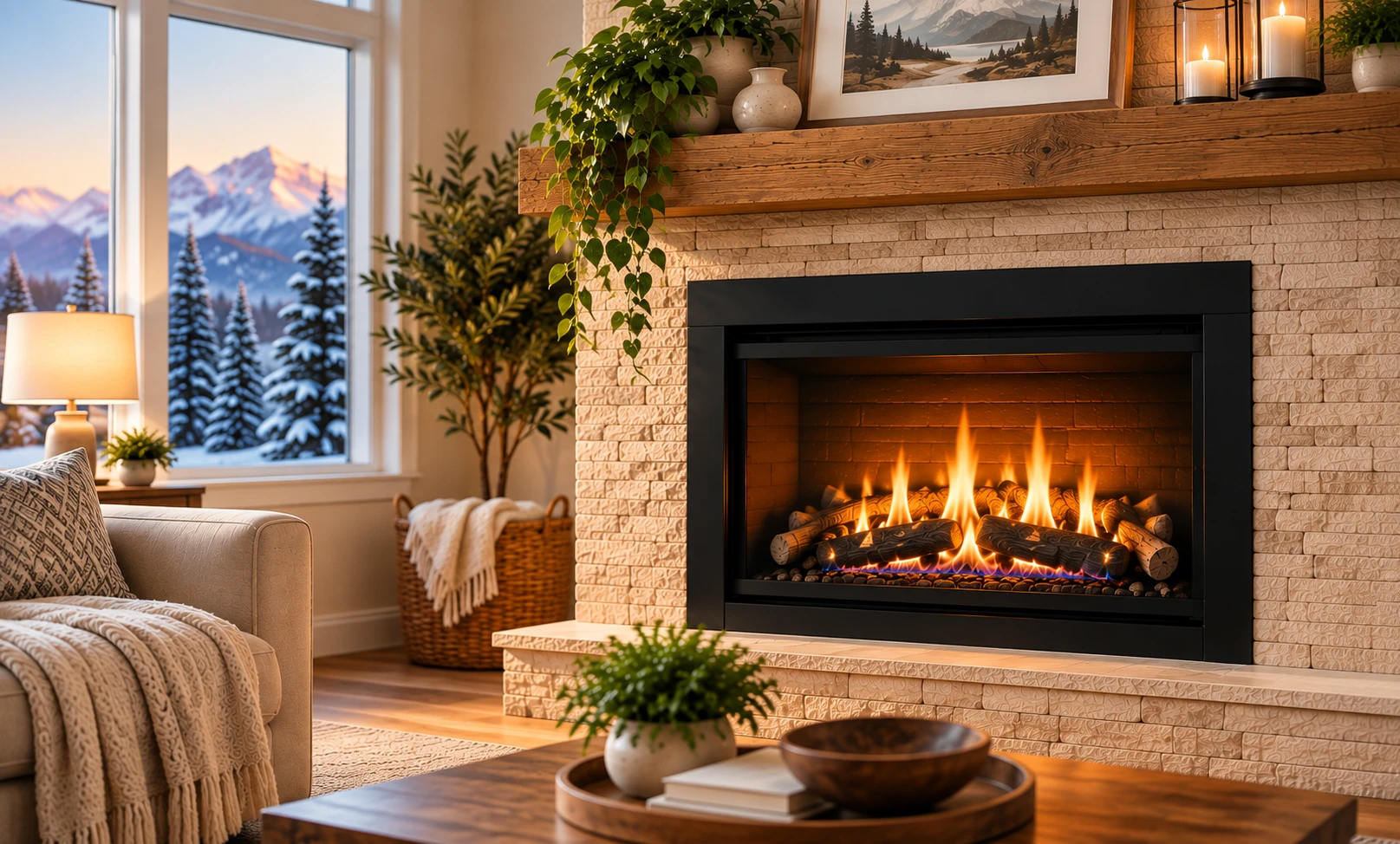
When you start shopping for a hearth, the many types of gas fireplaces can feel confusing at first. Gas fireplaces come in three main venting styles: direct vent, B-vent, and vent-free, plus popular formats like inserts, gas log sets, freestanding stoves, linear designs, multi-sided units, and outdoor models. Once you know how each one vents and where it fits, the right choice gets easy.
At Embers Living, we help homeowners pick the perfect fire every day. Our team has helped many homeowners find the right unit for their space, and the same handful of questions come up again and again.
Table of Contents
Gas Fireplaces at a Glance
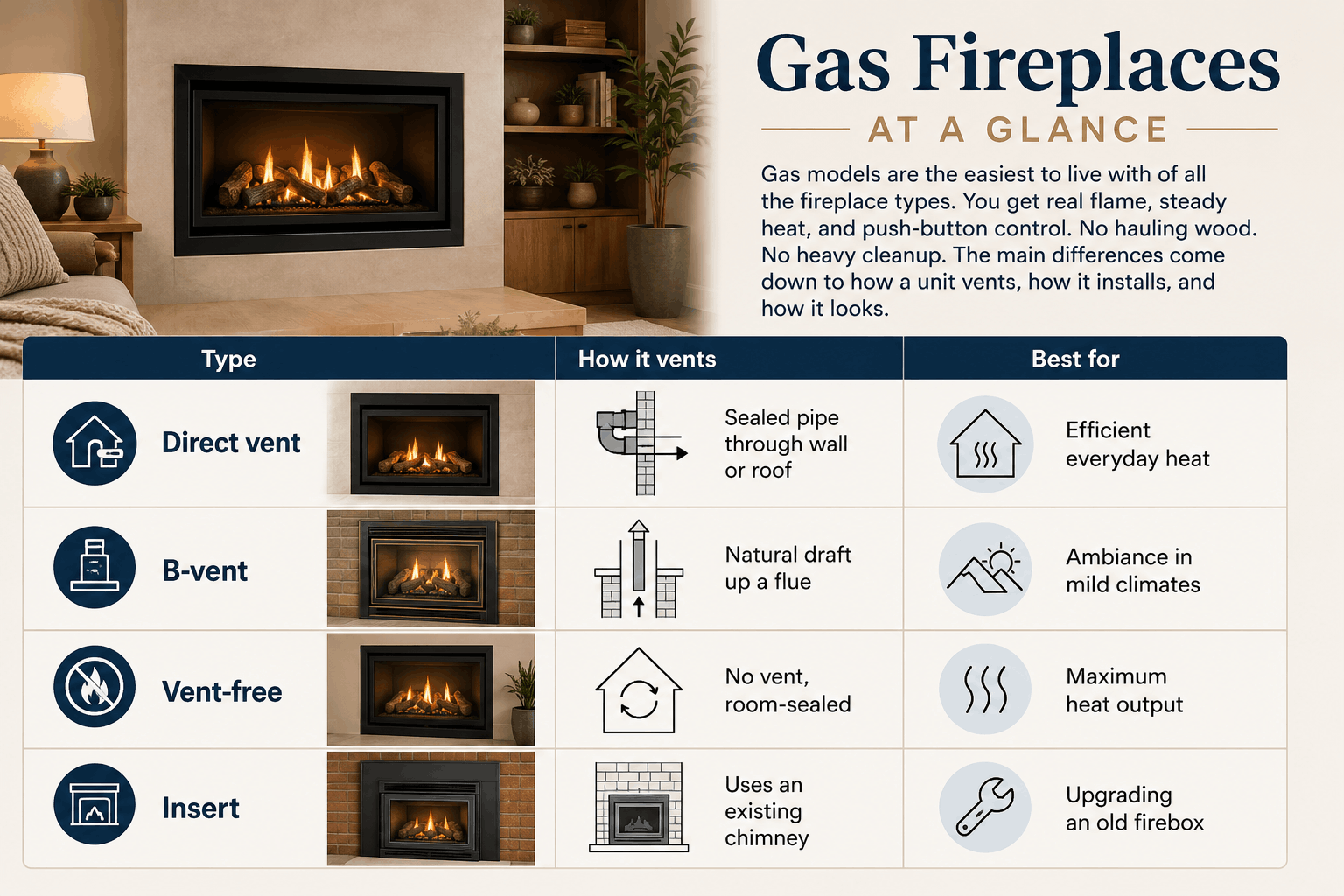
Gas fireplaces are among the most convenient fireplace options for many homeowners. They offer real flames, adjustable heat, and simple controls without the maintenance associated with wood-burning fireplaces. You get real flame, steady heat, and push-button control. No hauling wood. No heavy cleanup. The main differences come down to how a unit vents, how it installs, and how it looks.
| Venting Style | How It Works | Best For |
|---|---|---|
| Direct vent | Sealed pipe draws outside air in and sends exhaust back out | Efficient daily heat in most homes |
| B-vent | Uses indoor air and vents through a vertical flue | Traditional flame and ambiance in milder climates |
| Vent-free | No chimney or external vent; combustion gases release into the room | Quick warmth where local codes allow it |
By Venting: How Gas Fireplaces Exhaust Air
Direct Vent Gas Fireplaces
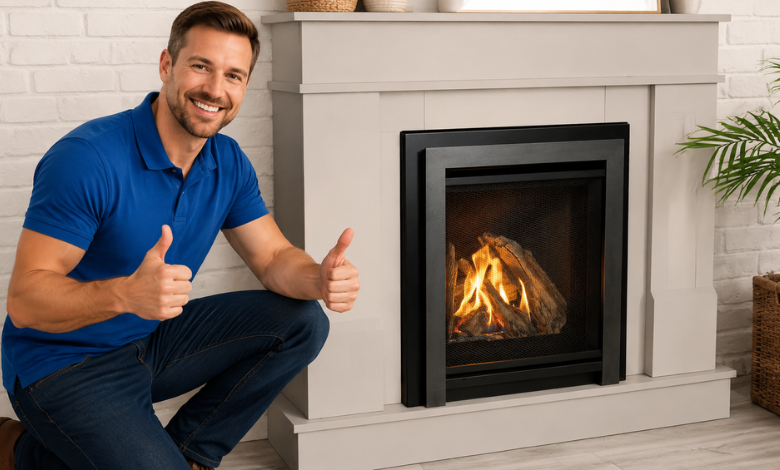
Our most popular option is a direct vent gas fireplace. Through a sealed pipe, it draws air from the outside and sends exhaust back out. Nothing from the fire enters your room.
These units are designed for efficient operation, with many models offering high efficiency ratings compared with traditional open fireplaces. Actual performance varies by manufacturer and model.
B-Vent Gas Fireplaces
A B-vent unit draws indoor air and vents combustion gases through a vertical flue. B-vent units are generally chosen more for their traditional flame appearance and ambiance than for maximum heating performance.
Choose a B-vent fireplace when you want a soft, traditional flame in a milder climate or when creating an inviting atmosphere is your main priority.
Vent-Free Gas Fireplaces
Vent-free gas fireplace models do not require a chimney or external vent because the combustion gases are released into the room. They are designed to provide high heat output and typically convert most of their fuel energy into usable heat.
These models can work well when you need a quick source of warmth.
Note: Local building codes may restrict or prohibit vent-free fireplaces. Proper sizing, airflow, installation, and room requirements are also important. Always check local codes and the manufacturer’s installation instructions before choosing one.
By Installation: How It Fits Your Home
Built-In Gas Fireplaces
A built-in unit is framed into a wall during new construction or a remodel. It gives you a finished, custom look and is a classic choice for creating a brand-new focal point in your living room.
Gas Fireplace Inserts
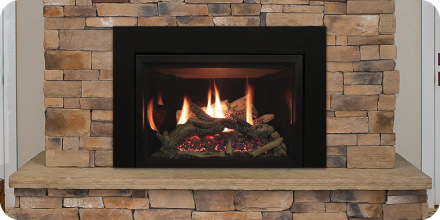
Have an old wood-burning firebox that you never use? A gas fireplace insert fits inside the existing opening and creates a sealed, purpose-built heating system.
The main types of gas fireplace inserts include direct vent and vent-free models, with natural gas and propane configurations available. An insert can turn an outdated or drafty fireplace into a more convenient source of heat.
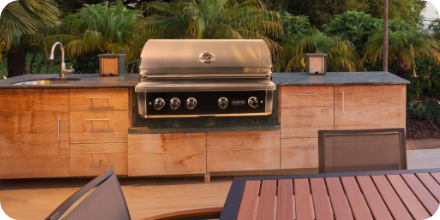
Outdoor Gas Fireplaces
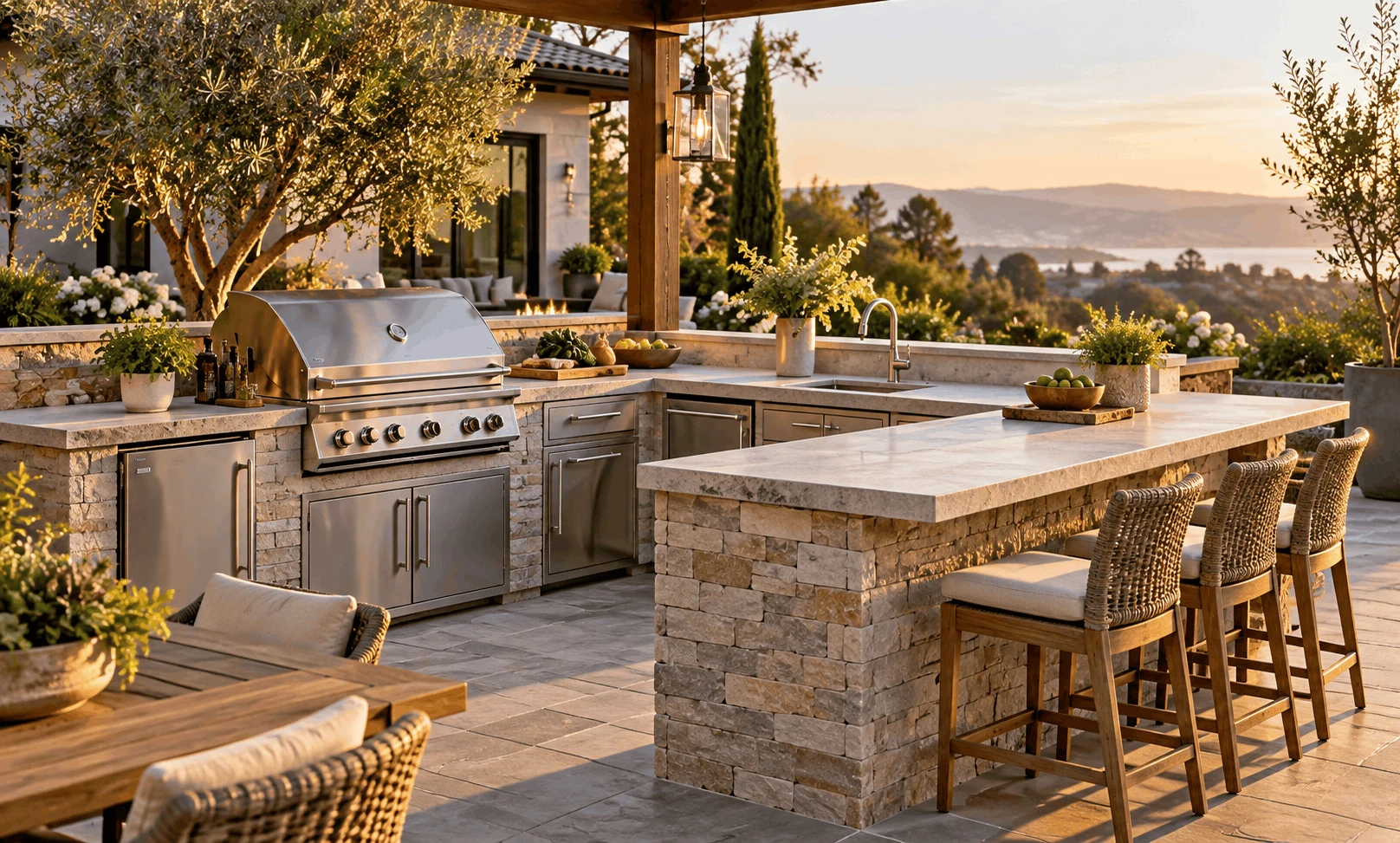
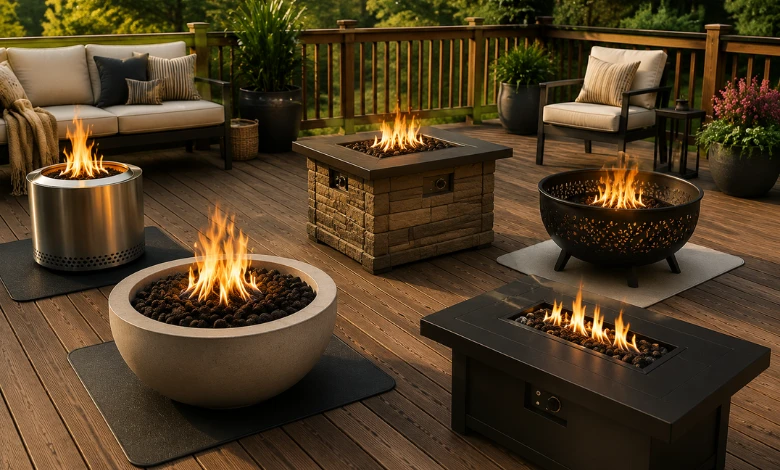
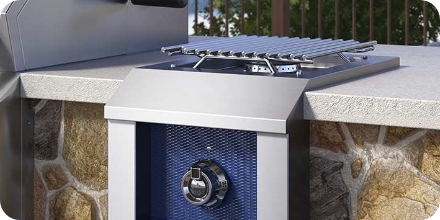
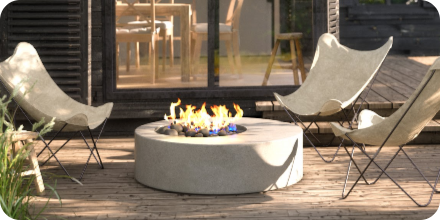
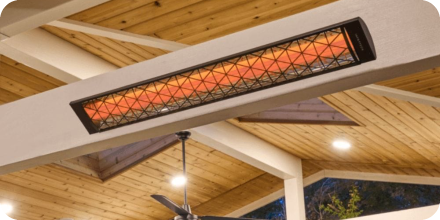
Want to enjoy the fire outside? An outdoor gas fireplace adds warmth and atmosphere to a patio or backyard gathering area. It brings the convenience of an on-demand flame outdoors and can help you enjoy your space later into the cooler months.
By Style: Matching Your Room
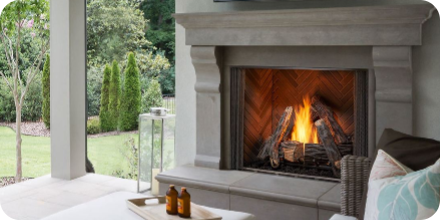
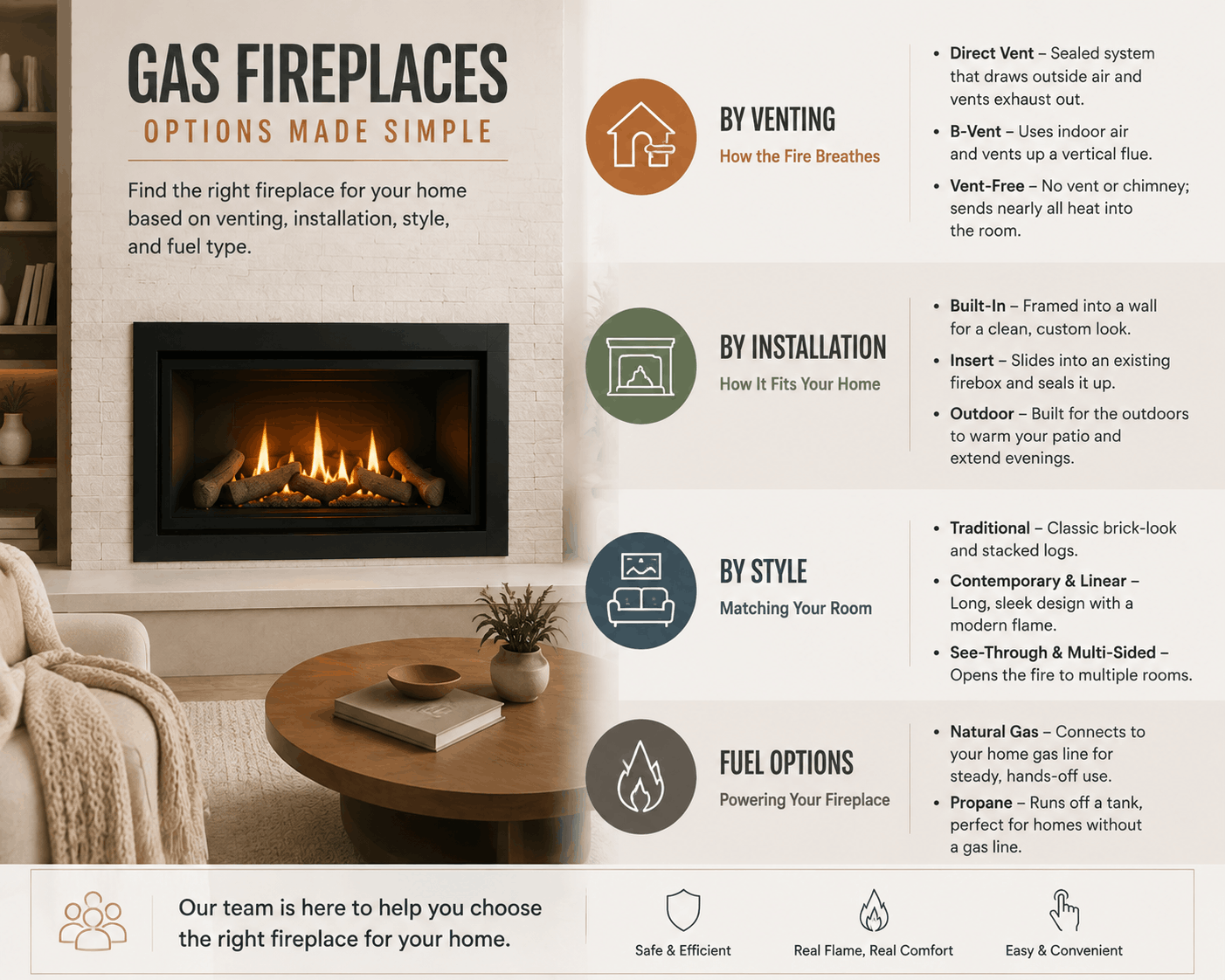
Your fireplace should complement your decor. Traditional gas fireplaces often feature classic brick-look interiors and stacked log beds for a cozy, timeless appearance.
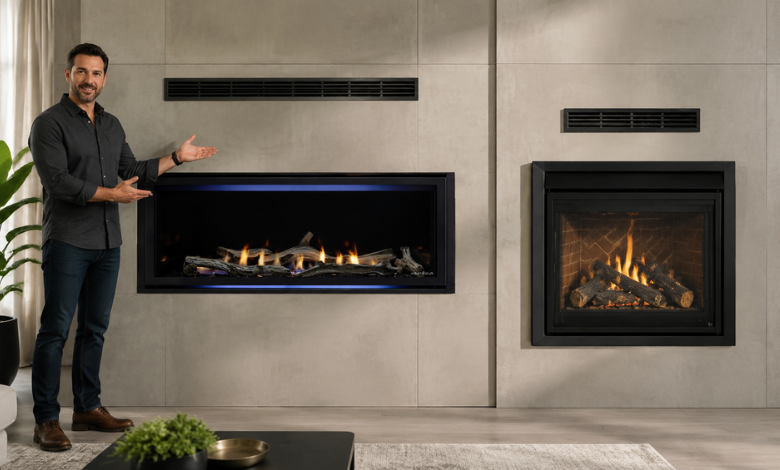
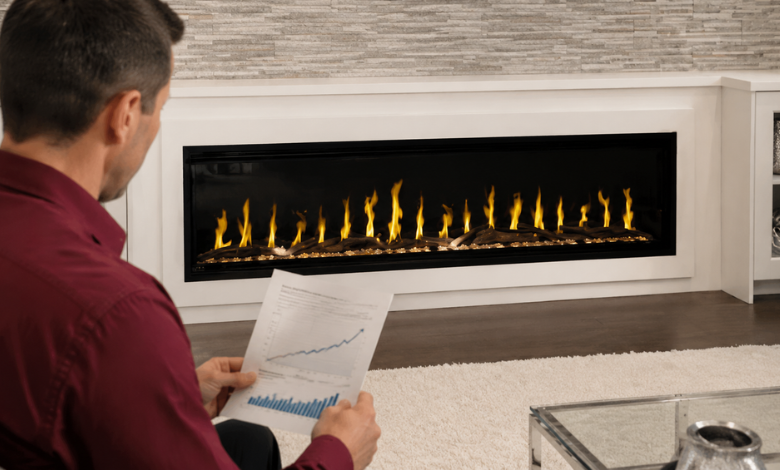
Contemporary and linear units are typically long and low, with wide glass viewing areas and modern flames displayed over glass beads, stones, or other decorative media.
See-through and multi-sided designs make the fire visible from two or three sides. They can divide an open floor plan, connect adjoining rooms, or create a dramatic architectural feature. Style is where your personality can shine.
Natural Gas vs. Propane
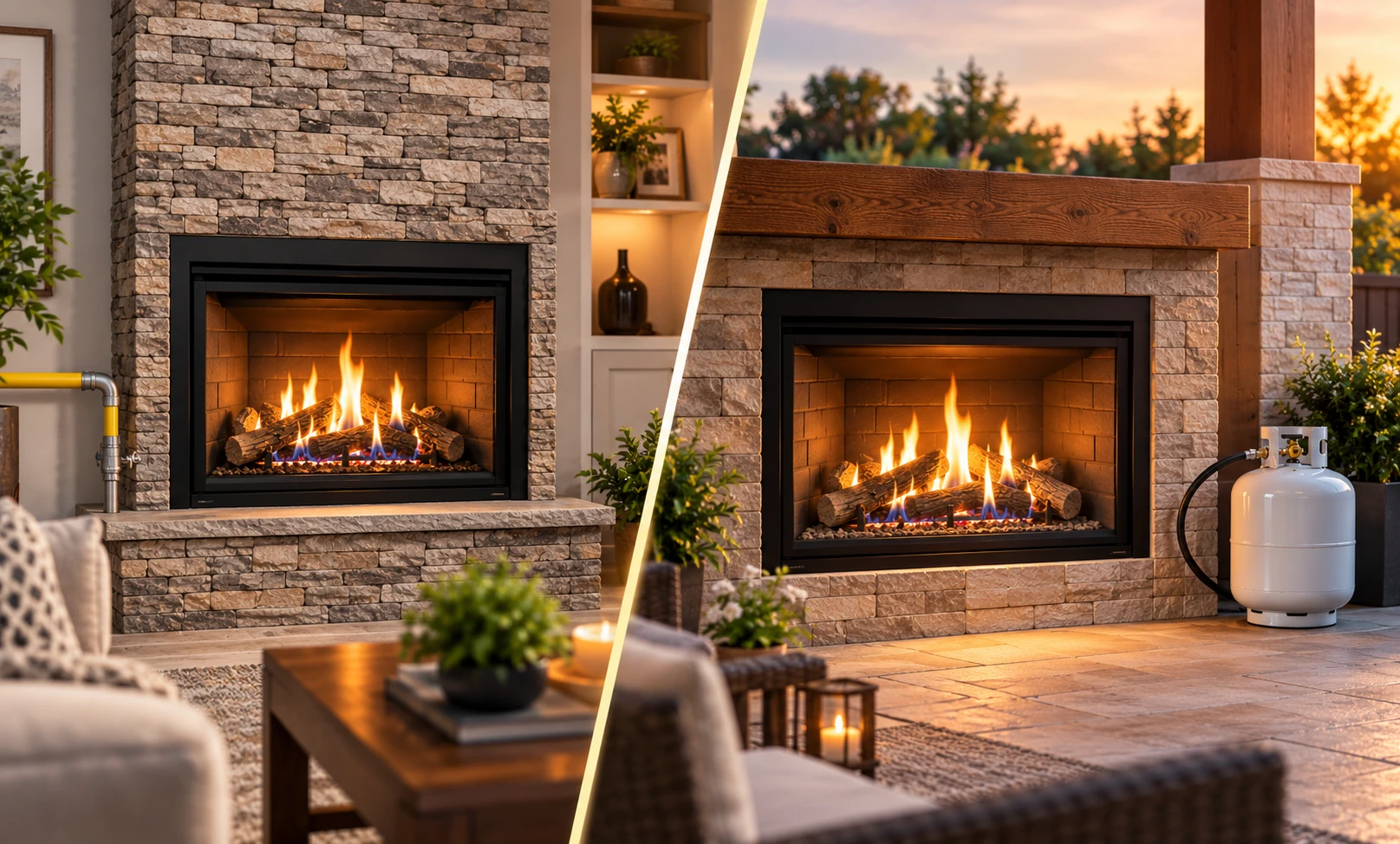
Many gas fireplaces are available in either natural gas or propane configurations. A natural gas fireplace connects to your home’s gas line for steady, hands-off use. Propane models run from a tank, which can be useful for rural homes without access to a natural gas line.
Both natural gas and propane can provide reliable fireplace performance. The right choice depends on your home’s fuel availability, installation requirements, local fuel costs, and the specifications of the fireplace model you select.
What Is the Best Gas Fireplace for Your Home?
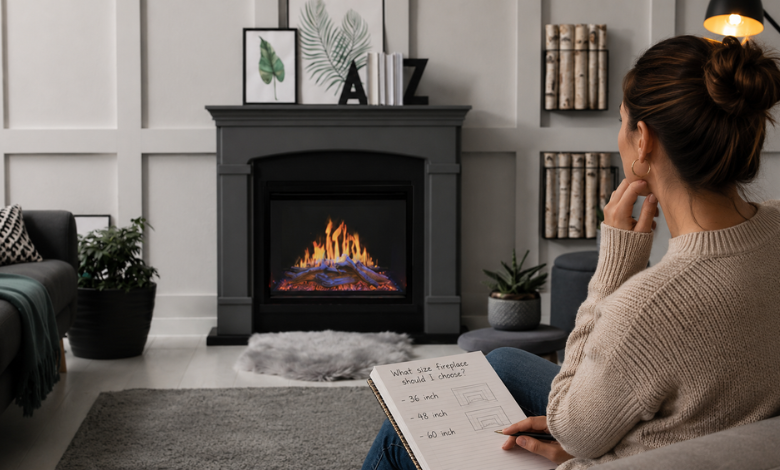
The ideal unit is the one that suits your space, your objectives, and your available venting. Start by asking three brief questions:
- Do you want more ambiance or more heat?
- Do you have an existing firebox or chimney?
- What fireplace style do you love?
Direct vent suits many homes that want efficient daily heat. Inserts are ideal for upgrading an existing fireplace, while linear units are a popular choice for modern interiors.
In our Westminster showroom, we often light several units side by side so you can feel the heat and compare the flames before you buy. Our team is always happy to help you decide.

Shop Gas Fireplaces at Embers Living
We carry direct vent, B-vent, vent-free, insert, linear, and outdoor gas fireplaces from trusted brands. Enjoy free shipping on most products, a friendly price match, and real expert support by phone or chat.
You can also visit our Westminster showroom to see the flames in person. Ready to find the right fit? Browse our gas fireplace collection or reach out today.
Not sure which gas fireplace fits your space? Visit our blog section, email us at sales@embersliving.com, or call 303-800-5659. Our Embers Living support team is here to help you light up your home.