







Are Ventless Gas Fireplaces Safe?
Posted by Anna William on Sep 14th 2026
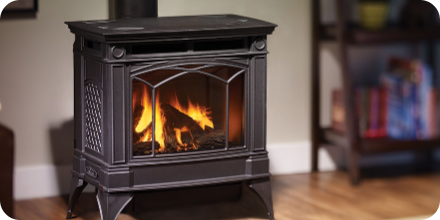
If you are shopping for supplemental heat without the cost of a chimney, you have almost certainly asked yourself: Are ventless gas fireplaces safe to run inside your home? Yes, ventless gas fireplaces are safe when they are ANSI-certified, correctly sized to the room, installed by a licensed professional, legal in your city, and paired with a working carbon monoxide detector.
That is the quick answer, but it comes with real conditions attached. A vent-free appliance releases everything it produces into your living space, so the margin for error is smaller than it is with a sealed direct vent unit. Below, we explain how these fireplaces work, the safety systems built into them, possible concerns, and what you should know before installation.
Table of Contents
- How Do Ventless Gas Fireplaces Work?
- The Safety Systems Built Into Certified Units
- Are Ventless Fireplaces Safe for Every Home?
- Room Size, BTU Limits, and Placement Rules
- Where Ventless Fireplaces Are Banned or Restricted
- Are Ventless Propane Fireplaces Safe?
- Safer Alternatives Worth Comparing
- Operating Yours Safely
- Frequently Asked Questions
- The Bottom Line
How Do Ventless Gas Fireplaces Work?
A ventless gas fireplace runs on a closed-loop principle, with no chimney, flue, or exterior wall penetration involved. The burner pulls combustion air directly from the room, burns natural gas or propane at a precise fuel-to-air ratio, and returns the heat plus combustion byproducts back into the same space.
That precision is the entire design. A vent-free burner is engineered to achieve near-complete combustion, converting fuel into heat, water vapor, and carbon dioxide with only trace amounts of carbon monoxide when operating correctly. Since heat does not escape through a flue, more of the generated warmth stays inside the room.
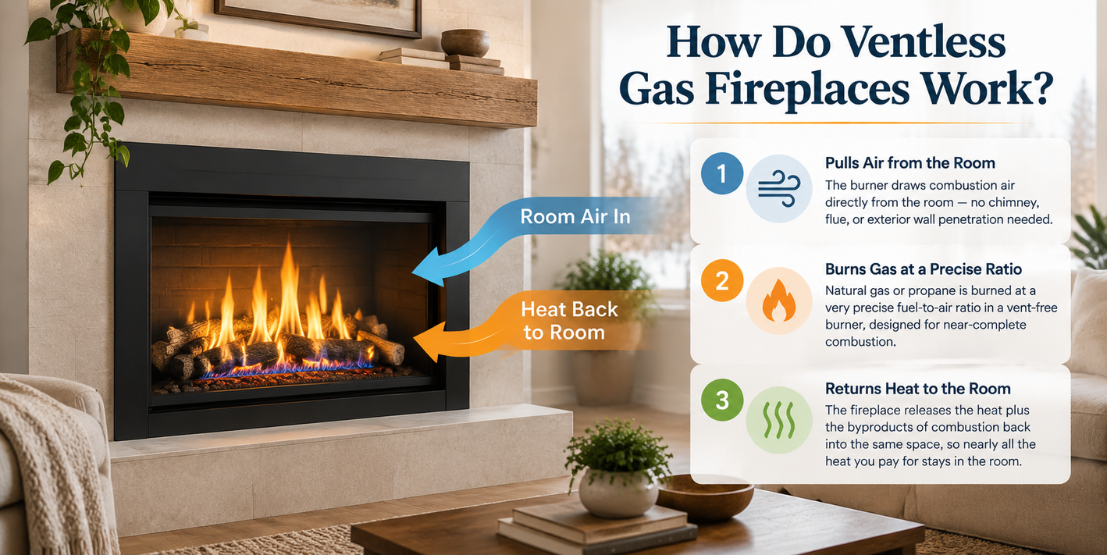
How Does a Ventless Gas Fireplace Work Compared to a Direct Vent Model?
The main difference comes down to ventilation. A direct vent fireplace uses a sealed combustion chamber that draws air from outside and sends exhaust outdoors. A vent-free model uses indoor air for combustion and releases heat and combustion byproducts back into the room.
That design makes proper sizing, certification, installation, and maintenance especially important. When comparing a gas fireplace option, homeowners should consider both heating needs and how the appliance fits their home's ventilation requirements.
The Safety Systems Built Into Certified Units
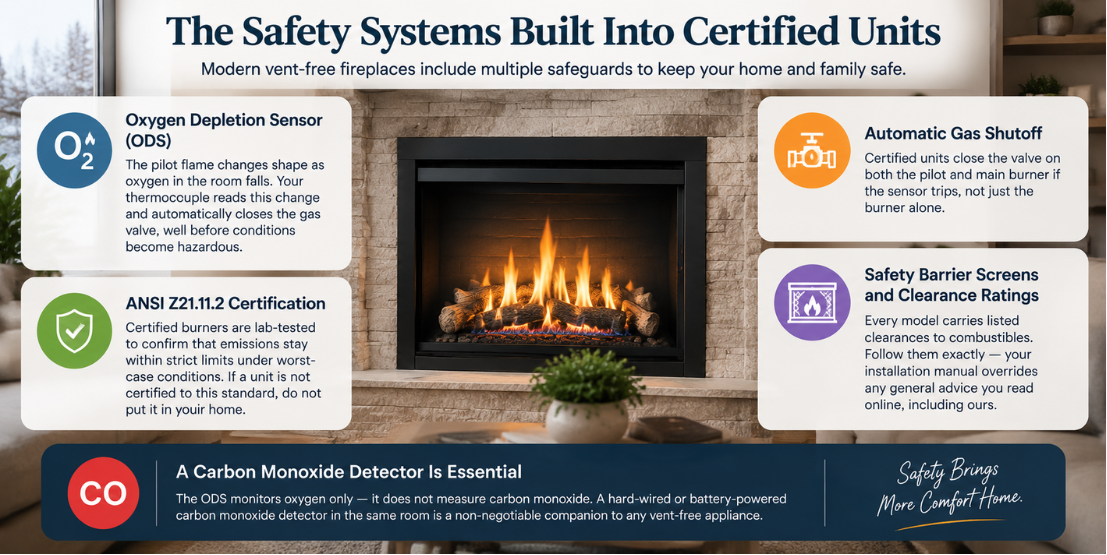
Modern vent-free appliances include multiple safety features designed to help protect your home when the unit is properly installed and maintained.
Oxygen Depletion Sensor (ODS)
The oxygen depletion sensor is the primary safety feature found in certified ventless gas fireplaces. The ODS monitors oxygen levels around the pilot flame. If oxygen drops below safe operating levels, the pilot flame changes and the thermocouple automatically shuts off the gas supply.
ANSI Z21.11.2 Certification
Certified vent-free burners are tested according to ANSI Z21.11.2 standards to confirm proper operation and acceptable emissions under controlled testing conditions. Always choose a unit that carries the required certification for your region.
Automatic Gas Shutoff
Certified units automatically stop gas flow when the safety system detects an issue. This protects against continued fuel delivery if the pilot flame is interrupted.
Safety Screens and Clearance Ratings
Every vent-free fireplace includes manufacturer-approved clearance requirements. Keeping furniture, curtains, decorations, and other combustible materials outside these limits is essential for safe operation.
The ODS monitors oxygen only and does not detect carbon monoxide. A properly installed carbon monoxide detector in the same room should always be used with any gas-burning appliance.
Are Ventless Fireplaces Safe for Every Home? The Risks Worth Weighing
Ventless gas fireplaces can be a good option for many homes, but they are not the right choice for every situation. Several factors should be considered before installation.
Moisture Output
Gas combustion creates water vapor. In tightly sealed homes with limited ventilation, additional moisture can contribute to condensation on windows and colder surfaces. Homeowners in newer, highly insulated properties should consider moisture levels before choosing a vent-free appliance.
Odor Amplification
Because ventless units use indoor air for combustion, existing odors, dust, cleaning products, and household particles may become more noticeable when the fireplace operates.
Respiratory Sensitivity
Some homeowners prefer sealed combustion systems, such as direct vent fireplaces, because they keep combustion air and exhaust separate from indoor living spaces.
Oversizing
Choosing a fireplace that is too large for the room can reduce comfort and increase the amount of combustion byproducts released into the space. Correct sizing is one of the most important parts of installation.
Room Size, BTU Limits, and Placement Rules
Ventless gas fireplaces must be correctly sized according to room volume and manufacturer specifications. The available space, ceiling height, and total BTU input all influence whether a unit is appropriate.
| Factor | Why It Matters |
|---|---|
| Room Volume | Determines whether the room has enough air volume for the fireplace size. |
| BTU Rating | Helps match heating output with the size of the space. |
| Placement | Maintains safe clearance from walls, furniture, and combustible materials. |
Bedroom and Bathroom Installation Rules
Many locations restrict vent-free fireplace installation in bedrooms and bathrooms because these spaces are commonly occupied for long periods with limited airflow. Always confirm local regulations before installation.
Altitude Considerations
Higher elevations can affect combustion performance. Homeowners in mountain regions should verify manufacturer altitude requirements and local installation guidelines before selecting a model.
Where Ventless Fireplaces Are Banned or Restricted
Ventless fireplace regulations vary by state, county, and city. Some locations restrict or prohibit certain unvented gas appliances, while others allow them with specific installation requirements.
Before purchasing a vent-free fireplace, contact your local building department or fire marshal to confirm whether the appliance is permitted in your area.
Are Ventless Propane Fireplaces Safe?
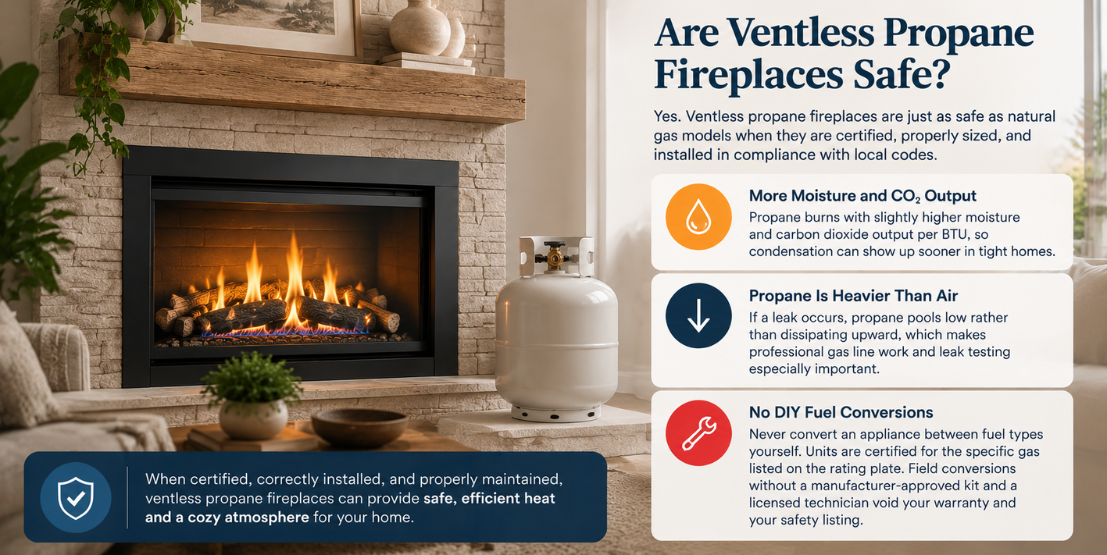
Ventless propane fireplaces can be a safe heating option when they meet the same certification, sizing, installation, and maintenance requirements as natural gas models. However, propane has a few unique characteristics homeowners should understand.
Propane produces slightly different combustion characteristics compared with natural gas, including higher moisture output per BTU. In tightly sealed homes, this can make condensation more noticeable. Propane is also heavier than air, meaning leaks can collect closer to the floor instead of rising.
Never convert a fireplace from one fuel type to another without a manufacturer-approved conversion kit and a licensed technician. Appliances are certified for the fuel type listed on their rating plate, and improper conversions can create safety risks.
Safer Alternatives Worth Comparing
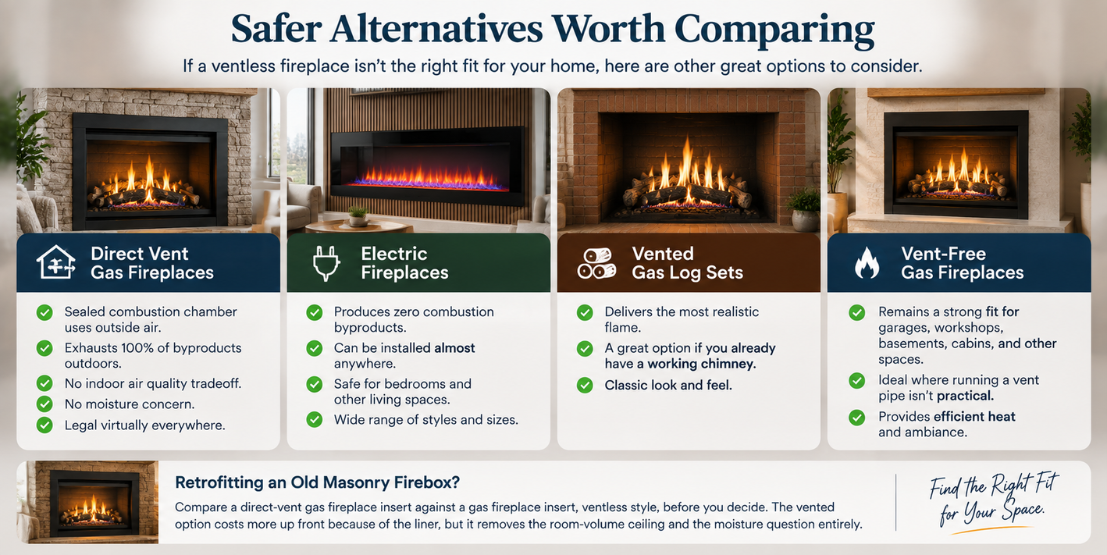
If a ventless fireplace does not feel like the right fit for your home, several alternatives can provide warmth, comfort, and a different installation approach.
| Fireplace Type | Main Benefits |
|---|---|
| Direct Vent Gas Fireplaces | Uses sealed combustion, draws outside air, and sends exhaust outdoors. |
| Electric Fireplaces | Creates no combustion byproducts and offers flexible installation options. |
| Vented Gas Log Sets | Provides realistic flames when used with a properly functioning chimney. |
| Vent-Free Gas Fireplaces | Works well in spaces where adding venting is difficult, such as workshops and cabins. |
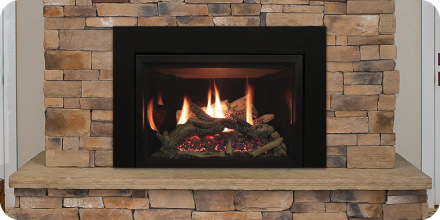
For homeowners replacing an old masonry fireplace, compare a gas fireplace insert before making a final decision. Direct vent inserts require more installation work, but they remove many indoor air considerations associated with vent-free models.
Operating Yours Safely
Safe operation starts with proper installation and regular maintenance. Follow these practices to help your fireplace perform correctly:
- Install a carbon monoxide detector in the same room.
- Schedule annual professional service before the heating season.
- Keep furniture, curtains, and decorations outside required clearance areas.
- Never block the oxygen depletion sensor.
- Do not operate a fireplace showing soot, unusual odors, or abnormal flame patterns.
- Follow the manufacturer's instructions for operation and maintenance.
The Bottom Line
Are ventless gas fireplaces safe? For many homes, yes, when you choose a certified appliance, match the size to your room, follow local codes, install it correctly, and maintain it regularly.
At Embers Living , our hearth experts can help you compare fireplace options, understand installation requirements, and choose the right heating solution for your home.
Need help choosing the right fireplace? Visit our blog section , email us at sales@embersliving.com , or call 303-800-5659 . Our Embers Living team is here to help you find the right fireplace.