







Fire Pit Under Covered Patio: Safety, Clearance, and Best Options
Posted by Anna William on Nov 20th 2026
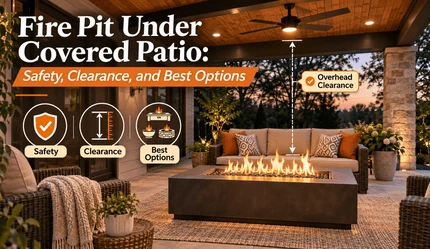
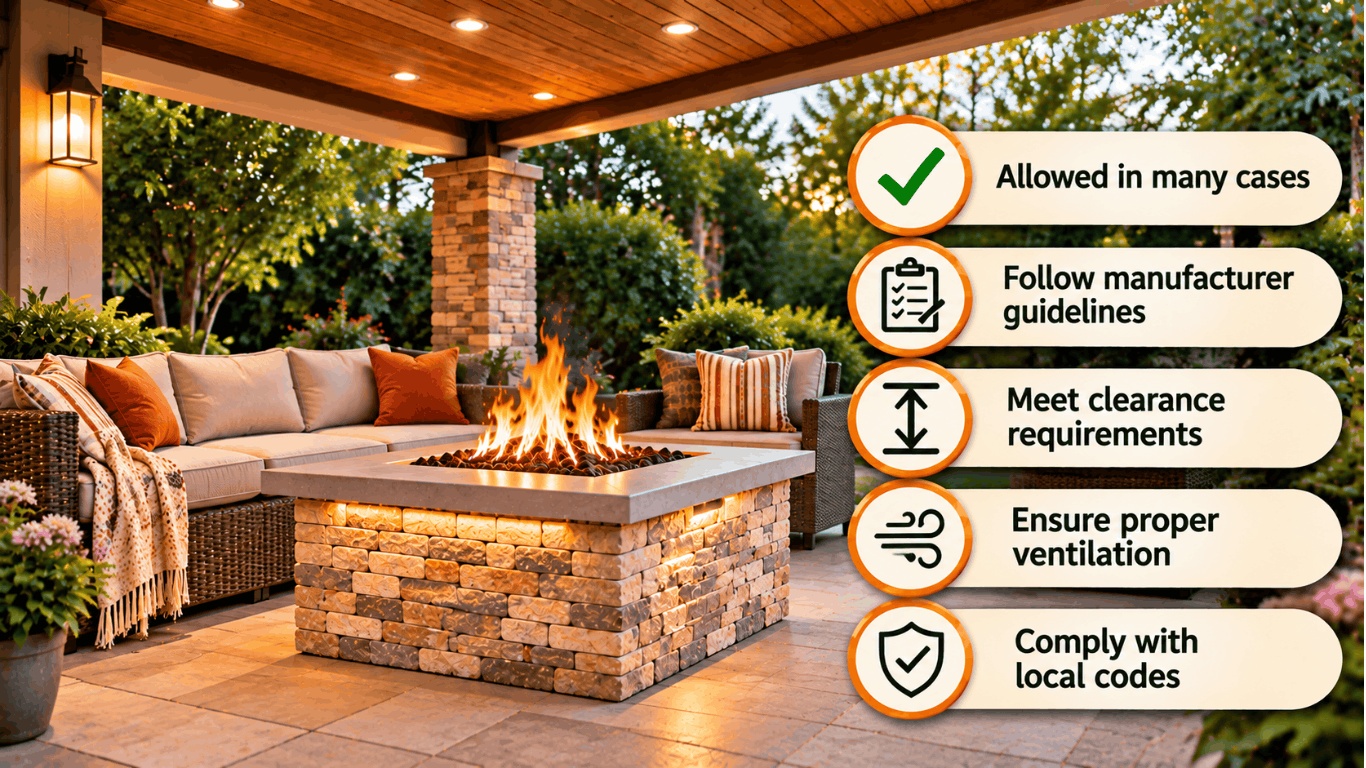
A fire pit under a covered patio space can bring warmth, comfort, and a welcoming atmosphere to your outdoor living area, but is it safe to install one beneath a roof? Yes, you can use certain gas fire pits under a covered patio, provided the specific model is approved for that installation, the space has adequate ventilation, and all manufacturer-required clearances and local fire codes are met. Wood-burning fire pits are generally unsuitable beneath patio roofs because of smoke, sparks, and rising heat.
? Quick Answer: Can You Put a Fire Pit Under a Covered Patio?
- Choose an approved gas model: certain natural gas and propane fire pits can be used under a roof when the manufacturer explicitly permits it.
- Skip wood-burning fire pits: smoke, sparks, embers, and rising heat make them generally unsuitable beneath a patio roof.
- Follow the overhead clearance listed in your installation manual, since requirements vary by model.
- Keep the space open: your patio must meet the appliance's ventilation requirements, and a ceiling fan does not count.
- Check flooring and local codes, keep combustibles away, and use a qualified professional for permanent gas installations.
Whether you're designing a new outdoor retreat or upgrading your existing patio, choosing the right fire feature requires more than finding a style you love. In this guide, we'll explain which fire pits work best under covered patios, how much clearance you need, what safety precautions to follow, and which alternatives can help you create a comfortable outdoor gathering space.
Table of Contents
- Can You Put a Fire Pit Under a Covered Patio?
- Safety Requirements for a Fire Pit Under a Covered Patio
- Best Fire Pit for Covered Patio Spaces
- Can You Install an Outdoor Fireplace Under a Covered Patio?
- How to Choose the Right Covered Patio Fire Pit
- Common Mistakes to Avoid
- Safest Alternatives for a Covered Patio
- Frequently Asked Questions
- Bottom Line
Can You Put a Fire Pit Under a Covered Patio?
Yes, you can put a fire pit under a covered patio if the appliance is specifically permitted for use beneath an overhead structure and the installation meets its safety requirements. However, not every covered patio or fire pit qualifies.
Here are the main considerations:
| Consideration | What to Check |
|---|---|
| Fire pit type | Natural gas and propane models may be suitable, while traditional wood-burning fire pits are generally not recommended. |
| Ceiling clearance | The patio roof must provide the minimum overhead distance specified by the fire pit manufacturer. |
| Ventilation | Your patio must meet the appliance's requirements for an outdoor, sufficiently open space. |
| Surrounding materials | Furniture, ceiling fixtures, curtains, and other combustible materials must remain outside required clearances. |
| Local regulations | Building and fire codes may impose additional installation requirements. |
Tip: Before purchasing, review the installation manual for your exact model. A fire pit labeled for outdoor use is not automatically approved for placement beneath a covered roof.
What Are the Safety Requirements for a Fire Pit Under a Covered Patio?
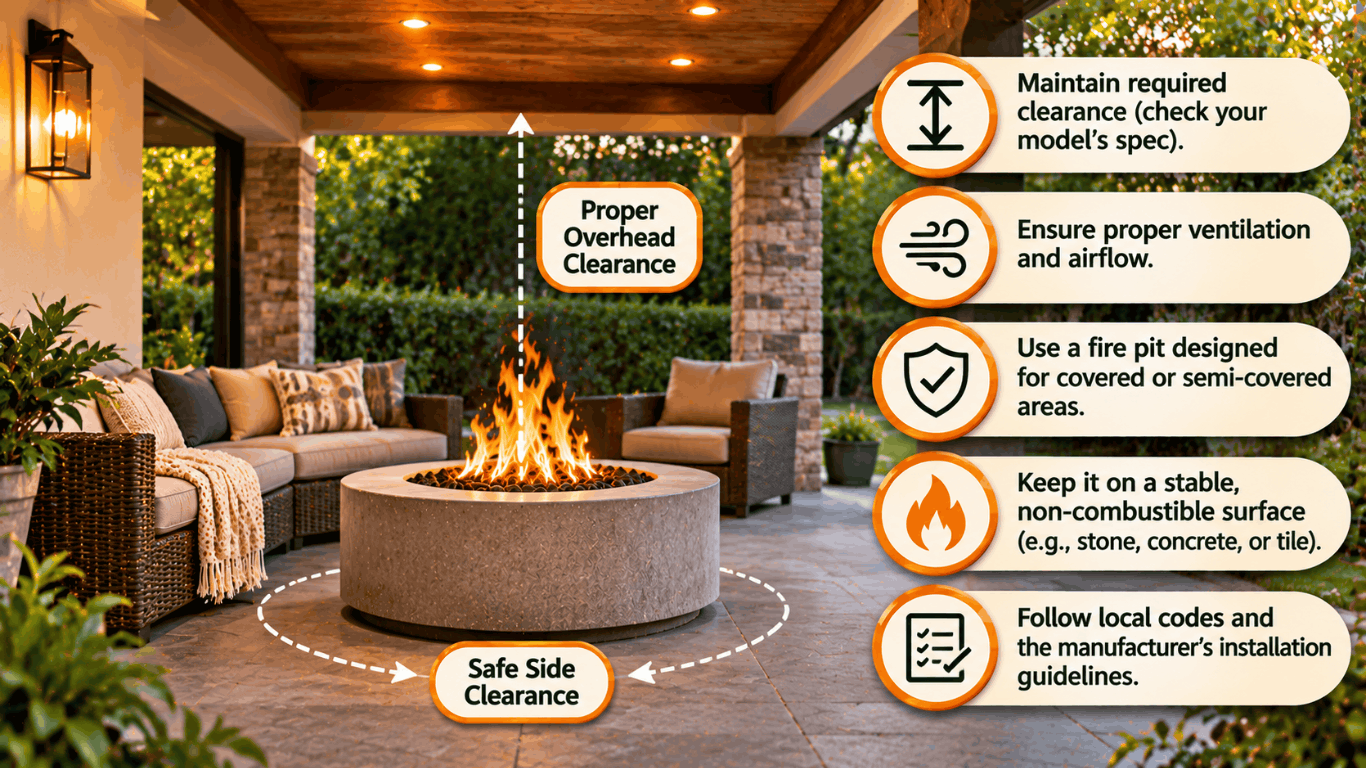
A covered patio with fire pit seating can become a favorite gathering spot, but proper planning is necessary to reduce fire and carbon monoxide risks. Here are the most important factors to evaluate.
1. Check the Ceiling Height and Overhead Clearance
One of the first things you should measure is the distance between your proposed fire pit location and the lowest overhead structure. Manufacturers specify minimum clearances to help prevent heat damage and ignition of surrounding materials.
Overhead clearance requirements vary depending on the fire pit manufacturer, burner design, and surrounding materials. For example, Outdoor GreatRoom specifies 72 inches above the burner for many of its fire tables, while certain Firegear models require 96 inches or more below combustible ceilings. Some models prohibit overhead structures entirely. These figures are examples, not a universal safe clearance, so always follow the installation manual for your exact appliance, including its specified measurement reference point.
Before installation:
- Measure from the reference point identified in your appliance manual.
- Include exposed beams, ceiling fans, and hanging light fixtures.
- Check for combustible roof materials and decorative features.
- Confirm the required clearance for your specific burner and fire pit assembly.
For example, a nine-foot patio ceiling does not automatically make the installation acceptable. The fire table's height, required clearance, and lowest overhead obstruction all affect whether the space qualifies.
Safety note: Never reduce required clearances by modifying the burner, lowering its output beyond its approved settings, or adding homemade heat shields.
2. Make Sure Your Patio Has Proper Ventilation
Ventilation is particularly important when operating a gas fire pit beneath a roof. Although propane and natural gas fire pits produce less visible smoke than wood-burning models, they still release combustion gases, including carbon monoxide.
An outdoor gas fire pit may be approved for a roofed space with open sides, but the exact enclosure requirements depend on its listing and installation instructions. Some manufacturers permit installation beneath a roof with no more than two side walls. Certain models may also allow three surrounding walls if the manufacturer's minimum permanently open area is maintained. For example, Outdoor GreatRoom specifies at least 30% permanently open surrounding side-wall area for certain three-wall configurations. These requirements vary by appliance, so always check your specific installation manual and applicable local codes. This does not mean every partially enclosed patio is acceptable.
For your patio, consider:
- Whether surrounding walls restrict airflow.
- Whether retractable curtains or panels could enclose the space.
- Whether the appliance's base and propane enclosure receive the required ventilation.
- Whether seasonal screens or windows change how the space is classified.
Tip: A ceiling fan does not replace the permanently open ventilation required by the appliance. If your patio functions more like an enclosed sunroom, consider an appropriately rated electric heating alternative rather than an outdoor gas fire pit.
3. Choose Appropriate Flooring
Your patio flooring matters because fire pits generate heat above and around the appliance. Concrete, brick, and suitable natural stone are commonly preferred for outdoor fire features because they are noncombustible.
If your patio has wood or composite decking, check whether the specific fire pit is approved for that surface. Some gas fire tables permit this when installed according to their instructions, while others require a noncombustible base.
Safety note: Do not assume that placing a protective mat beneath an otherwise unsuitable fire pit makes the installation safe.
4. Keep Flammable Materials Away
A beautiful patio arrangement often includes cushioned seating, outdoor rugs, potted plants, and decorative curtains. However, these items can create hazards when placed too close to open flames. Maintain the manufacturer's required clearance around the fire pit and keep movable materials well away from the burner.
Pay particular attention to:
- Outdoor cushions and upholstered furniture
- Hanging curtains and fabric shades
- Patio umbrellas
- Low-hanging decorations and plants
- Ceiling fans and light fixtures
Wind can move lightweight materials toward a flame, so consider how your patio behaves during breezy conditions.
What Is the Best Fire Pit for Covered Patio Spaces?
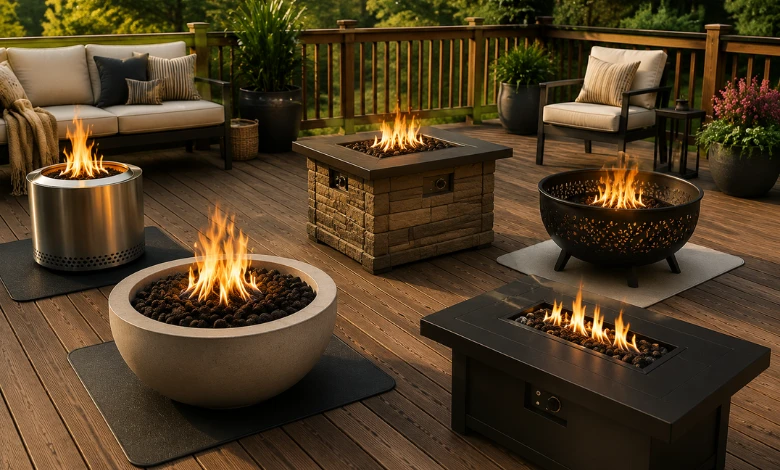
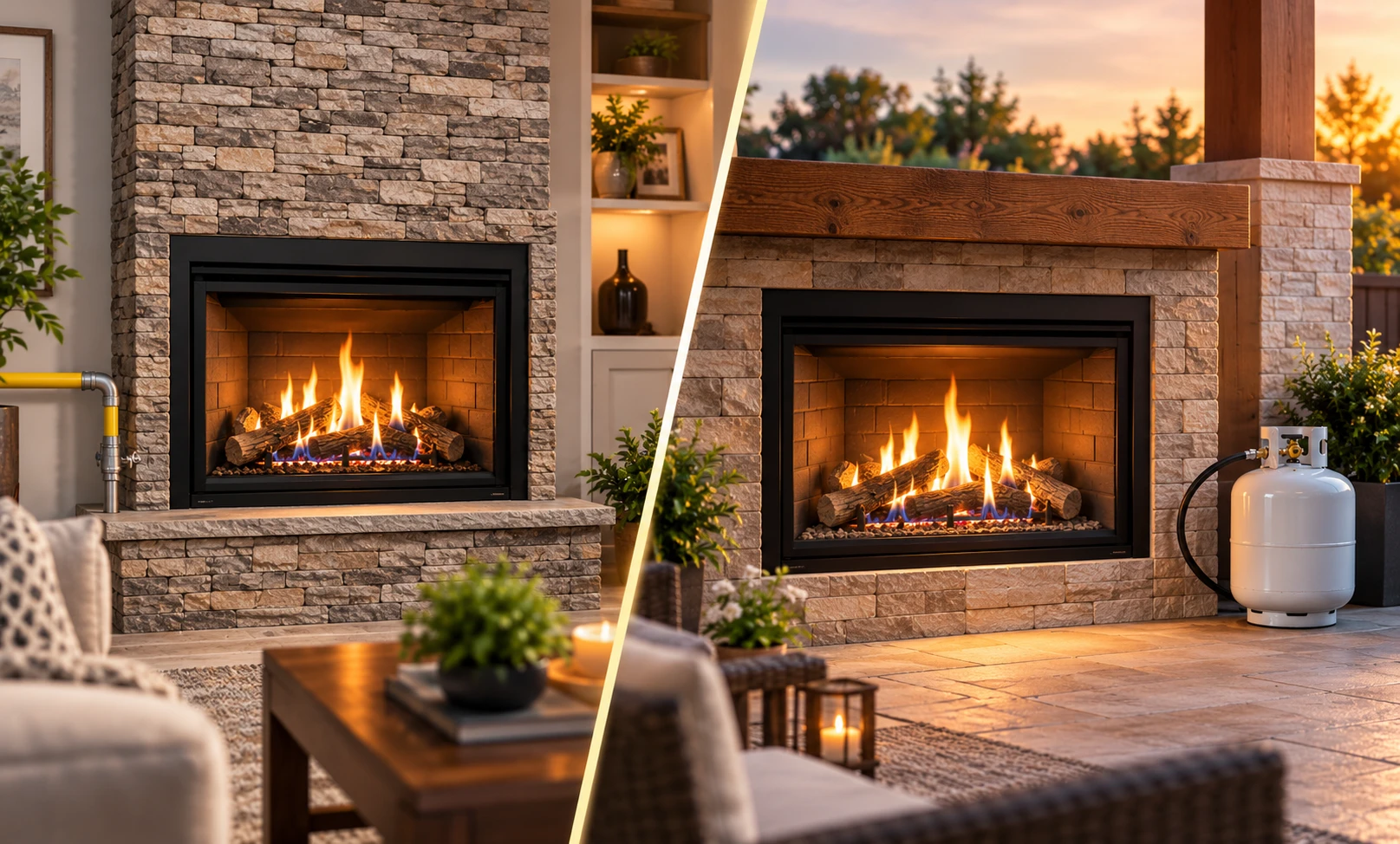
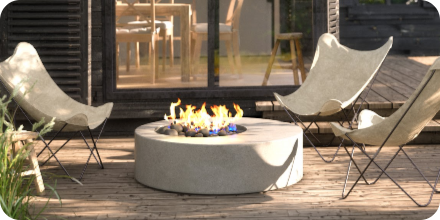
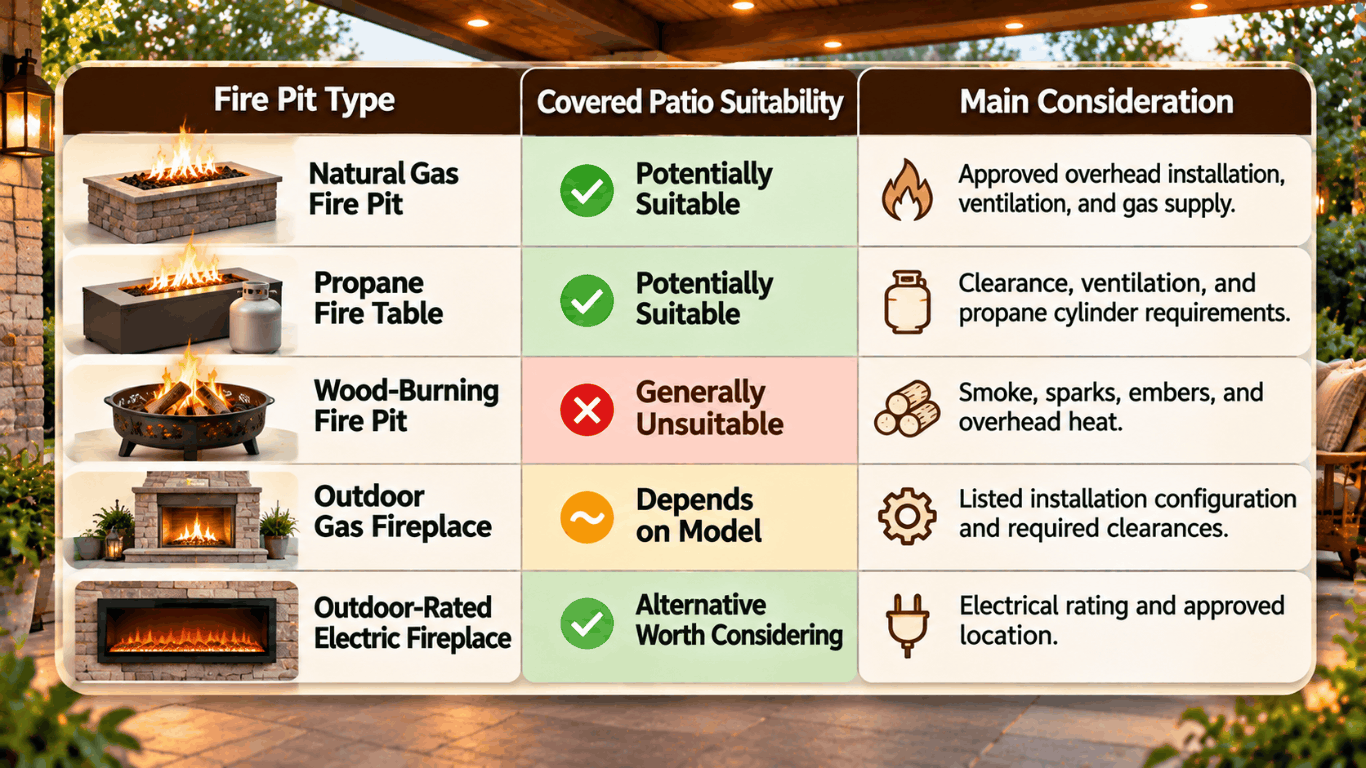
The best fire pit for covered patio use is an outdoor-rated model whose manufacturer explicitly permits installation under a roof and whose requirements your patio can meet. Gas fire tables are often worth considering because they offer adjustable flames, convenient operation, and no wood ash to remove.
Here is how the main options compare:
| Fire Pit Type | Covered Patio Suitability | Main Consideration |
|---|---|---|
| Natural gas fire pit | Potentially suitable | Approved overhead installation, ventilation, and gas supply |
| Propane fire table | Potentially suitable | Clearance, ventilation, and propane cylinder requirements |
| Wood-burning fire pit | Generally unsuitable | Smoke, sparks, embers, and overhead heat |
| Outdoor gas fireplace | Depends on model | Listed installation configuration and required clearances |
| Outdoor-rated electric fireplace | Alternative worth considering | Electrical rating and approved location |
Tip: No fuel type guarantees a safe installation. Always verify the individual product's requirements before buying.
Natural Gas Fire Pits
A natural gas fire pit can be a practical choice for a covered patio if you want a permanent outdoor gathering space. Because these models connect to a properly installed gas line, you never have to swap out or refill propane cylinders. They work especially well for homeowners who entertain often or want a built-in fire feature that ties into their landscaping. Natural gas fire pits offer adjustable flame control, a steady fuel supply, and no ash to clean up afterward. Keep in mind that a qualified professional will need to evaluate the gas connection, pipe sizing, and overall installation requirements before the fire pit goes in.
Propane Fire Tables
A propane fire table under covered patio areas offers a combination of convenient operation and flexible placement. Many propane fire tables incorporate a decorative tabletop surrounding the burner, making them appealing for conversation seating arrangements. Depending on the model, features may include electronic ignition, adjustable flame height, and integrated cylinder storage.
If you're considering one, check whether the manufacturer permits:
- Installation beneath your particular patio roof
- Use on your existing flooring
- Storage of the propane cylinder within its enclosure
- The available ventilation around the cylinder and burner
Safety note: Never place a propane cylinder inside an unapproved, unventilated cabinet or alter the enclosure to make it fit.
Wood-Burning Fire Pits
A wood-burning fire pit is generally not a safe choice for a covered patio. Unlike gas models, wood fires throw sparks and flying embers, produce smoke, and release a large amount of radiant and rising heat. Those risks increase significantly when a solid roof or combustible structure sits directly above the flames, and even "smokeless" wood-burning fire pits still produce some smoke and sparks.
If you love the experience of a traditional wood fire, we recommend placing a suitable wood-burning fire pit in a separate open-air area that meets the manufacturer's instructions and local regulations. That way, you can still enjoy gathering around a crackling fire without putting it beneath your patio roof.
Can You Install an Outdoor Fireplace Under a Covered Patio?
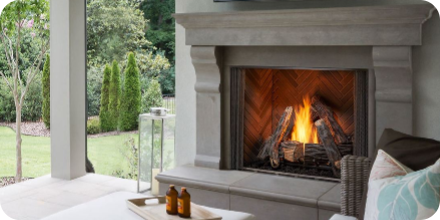
Yes, in many cases you can install an outdoor fireplace under a covered patio, but the requirements are stricter than those for a freestanding fire pit. Because a roof or pergola traps heat and exhaust overhead, the type of fireplace you choose and how it is installed matter a great deal.
Gas Outdoor Fireplaces
A listed outdoor gas fireplace can be a good fit for certain covered structures, as long as it is installed exactly as the manufacturer specifies. Some models call for a particular enclosure design, dedicated ventilation openings, minimum clearances to combustible materials, or specific venting components. Always check the installation manual before planning your layout, since these details vary from one model to the next.
Wood-Burning Outdoor Fireplaces
Outdoor wood-burning fireplace units need more planning under a roof. You will need a properly designed chimney system, safe exhaust routing that carries smoke and embers away from the structure, adequate clearances from beams and ceilings, and approval under your local building and fire codes.
Electric Outdoor Fireplaces
If an open flame isn't practical for your space, an outdoor electric fireplace offers the look and warmth of a fire feature without combustion, smoke, or venting concerns.
Our recommendation: For any permanent fireplace installation, work with a qualified installer who can evaluate your patio structure, confirm local code requirements, and recommend a product that is listed for your specific setup.
How to Choose the Right Covered Patio Fire Pit
Once you've confirmed that your patio can accommodate a fire pit, you can focus on finding a model that fits your layout and preferences.
Consider the Size of Your Patio
Start by measuring the usable floor area and mapping out where people will sit and walk. On a smaller patio, a compact fire table helps preserve space around your furniture. In a larger covered outdoor living area, a rectangular or linear gas fire feature pairs well with sectional seating. Whatever size you choose, make sure it leaves enough room for all required clearances, safe access, and comfortable movement around the space.
Choose the Right Shape and Style
Your covered patio fire pit should complement both your outdoor furniture and the architecture of your home. Round and square fire tables tend to suit intimate seating arrangements, while rectangular models pair naturally with longer sofas. Finishes also shape the overall look, from concrete-style tops and metal designs to contemporary linear burners. Settle on a style only after confirming the appliance is suitable for your covered space.
Consider Heat Output
Gas fire pit heat output is usually measured in British thermal units per hour (BTU/h). A higher BTU rating generally means greater fuel input, but it doesn't automatically translate to better comfort or a safer fit under a roof. Burner design, flame configuration, weather conditions, and how far guests sit from the fire all affect how warm it feels. Higher-output models may also require larger overhead and side clearances. Instead of choosing the biggest burner available, look for a model that matches your patio's dimensions and installation limits.
Look for Convenient Features
Modern gas fire pits include features that make everyday use easier. Depending on the model, these may include electronic ignition, adjustable flame height, approved wind guards, and fitted protective covers. Stick with accessories recommended by the manufacturer, and never place a cover on the fire pit while it's running or still hot.
Common Mistakes to Avoid When Installing a Covered Patio Fire Pit
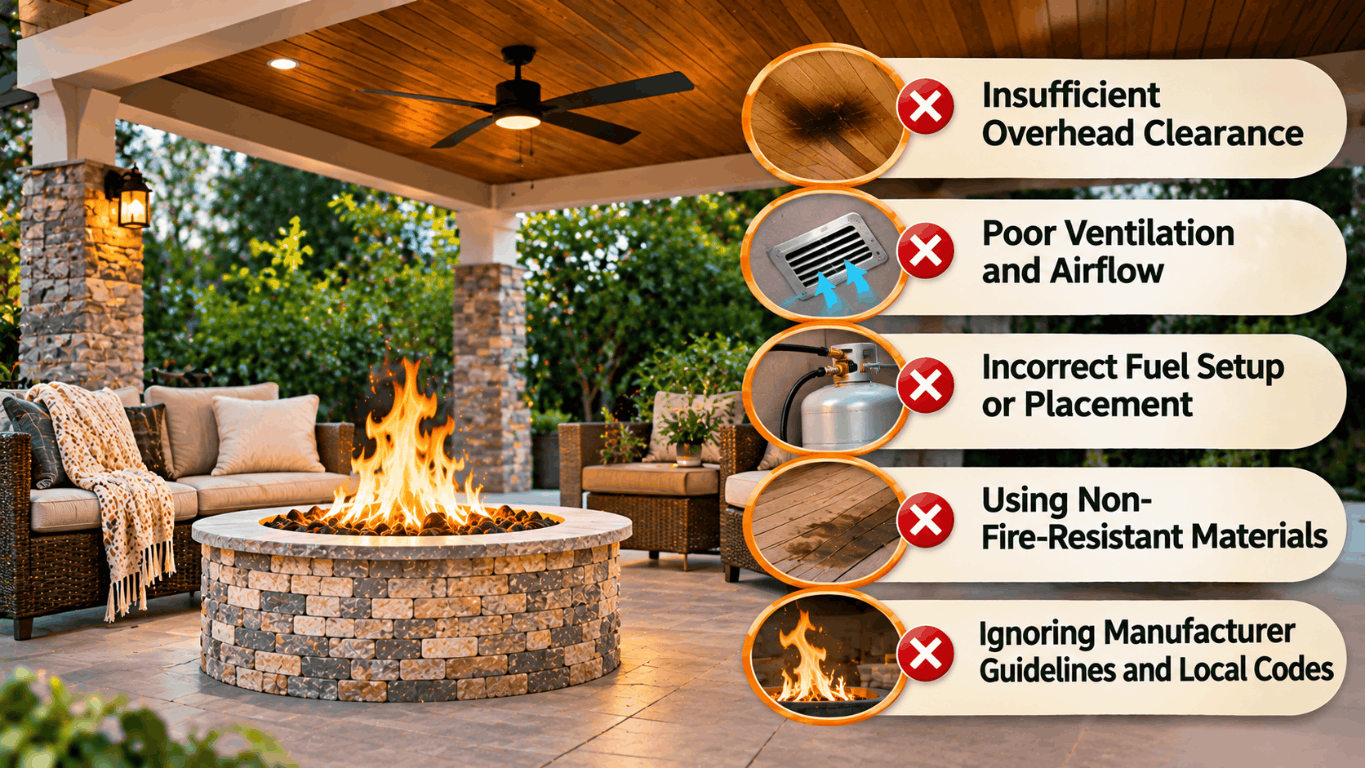
Even an attractive covered patio design can become unsafe when installation details are overlooked. One common mistake is purchasing a fire pit before checking the ceiling height. Another is assuming that all gas fire pits are suitable beneath roofs simply because they are designed for outdoor use.
You should also avoid:
- Installing a wood-burning fire pit directly beneath a combustible patio roof.
- Using outdoor gas fire pits in enclosed sunrooms or garages.
- Placing propane cylinders in unapproved enclosed compartments.
- Positioning furniture, curtains, or decorative accessories too close to the burner.
- Ignoring gas connections, maintenance requirements, or local permits.
- Modifying the burner or adding homemade shielding to compensate for insufficient clearance.
Tip: Taking the time to review the installation instructions before purchasing can help prevent expensive changes later.
What Are the Safest Alternatives for a Covered Patio?
If your patio cannot meet the requirements for an open-flame fire pit, you still have several options for creating a welcoming outdoor space.
Outdoor-Rated Electric Fireplaces
An outdoor-rated electric fireplace can provide a decorative flame effect without burning wood, propane, or natural gas. However, the product must be approved for the proposed outdoor location and installed according to its electrical and weather-exposure requirements.
Electric Patio Heaters
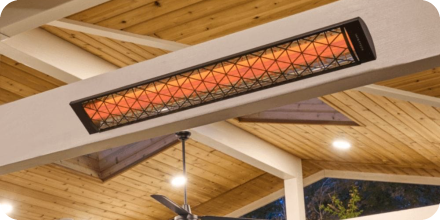
An appropriately rated electric patio heater may be suitable for covered outdoor seating areas when installed with the required clearances. Wall-mounted and overhead models are available, but they must be installed in locations permitted by their manufacturers.
Fire Pit in an Open Backyard
Another option is to keep your covered patio primarily for dining and lounging while placing the fire pit in a separate, open-air section of your yard. This arrangement can create two distinct gathering areas while allowing you to choose a fire pit specifically suited to the open location.
Our recommendation: At Embers Living, you can browse fire pits and fire tables, outdoor fireplaces, and patio heaters to compare solutions for your outdoor living plans.
Frequently Asked Questions About Fire Pits Under Covered Patios
Can you put a propane fire pit under a covered patio?
Yes, certain propane fire pits can be used under a covered patio if the manufacturer approves the installation. The patio must meet the appliance's overhead clearance, ventilation, and local fire code requirements. Never operate an outdoor propane fire pit in a fully enclosed space.
How much clearance do you need above a fire pit?
Overhead clearance depends on the fire pit model and manufacturer. For example, some Outdoor GreatRoom gas fire pits require at least 72 inches (6 feet) between the burner and overhead combustible materials, while other models require 84 to 120 inches or prohibit overhead structures. Always follow your specific fire pit's installation manual rather than relying on a universal clearance measurement.
Can you use a smokeless fire pit under a covered patio?
Generally, no. Wood-burning smokeless fire pits still produce heat, sparks, and combustion gases that can create hazards beneath a patio roof. For example, Solo Stove advises against using its wood-burning fire pits beneath overhead structures. Place your smokeless fire pit in an open outdoor area that meets the manufacturer's clearance requirements.
Can you put a fire pit under a pergola?
Yes, some gas fire pits can be installed beneath a pergola if the manufacturer permits it and the structure meets all required clearances and ventilation conditions. However, wooden beams, fabric coverings, and nearby combustible materials can create fire hazards. An open-roof pergola does not automatically make the installation safe.
Can you use a fire pit on a screened-in porch?
Generally, avoid using a fire pit on a screened-in porch unless the manufacturer specifically approves that installation. Some gas appliances permit particular partially enclosed outdoor configurations, but screens and surrounding walls must not interfere with required ventilation. Wood-burning fire pits are generally unsuitable because of smoke, sparks, and heat. An outdoor-rated electric heater may be a safer alternative.
Do gas fire pits produce carbon monoxide?
Yes, both propane and natural gas fire pits can produce carbon monoxide during combustion. This colorless, odorless gas can accumulate in poorly ventilated spaces and cause serious poisoning. Always operate gas fire pits in approved, adequately ventilated outdoor areas, and never use them inside homes, garages, or enclosed patios.
Bottom Line: Choose a Fire Feature Approved for Your Covered Patio
A fire pit can turn your covered patio into an inviting place to gather, unwind, and spend time with family and friends. The key is choosing a fire feature that is actually approved for your space, rather than picking one based on looks or fuel type alone. Natural gas fire pits and propane fire tables can be practical options for covered patios with enough open space, while outdoor-rated electric fireplaces and patio heaters offer a great alternative when an open flame isn't the right fit. Before installation, review the manufacturer's clearance requirements, ventilation conditions, flooring compatibility, and local regulations, and work with a qualified professional for any permanent gas installation.
Ready to upgrade your outdoor living space? Explore our selection of fire pits, outdoor fireplaces, and patio heating solutions at Embers Living. Our team can help you compare styles, features, and manufacturer requirements so you can buy with confidence.
Have questions about adding a fire pit to your covered patio? Talk to our team. Email us at sales@embersliving.com, call (303) 800-5659, connect with us through live chat, or contact us online. You can also visit our showroom at 7705 W. 108th Ave, Unit 600, Westminster, CO 80021. Our Embers Living team will help you find the right fire feature for your outdoor space.