








How to Clean and Maintain a Fireplace: A Complete Guide
Posted by Anna William on Jun 19th 2026
A warm fire is one of the best parts of a cold evening, and knowing how to clean and maintain a fireplace is what keeps that comfort safe, efficient, and looking its best season after season. Whether you own a gas, electric, or wood-burning model, a little routine care prevents soot buildup, reduces fire hazards, and helps your hearth last for years. At Embers Living, our team works with fireplaces every day, and this guide walks you through exactly what to do, how often to do it, and when to call a professional.
Why Fireplace Maintenance Matters
Regular fireplace maintenance is about more than appearances. In a wood-burning fireplace, every fire leaves behind soot and a sticky, dark residue called creosote. Creosote is highly flammable, and when it accumulates inside the chimney, it becomes one of the leading causes of house fires. Gas and electric units stay cleaner, but dust, pet hair, and debris still collect around burners, logs, and vents, which can affect performance and air quality.
Good upkeep delivers three clear benefits: safety from fire and carbon monoxide risk, better efficiency so your fireplace heats the way it should, and longevity that protects your investment. Spending a few minutes each week and scheduling one yearly inspection makes all the difference.
Tools and Supplies You'll Need
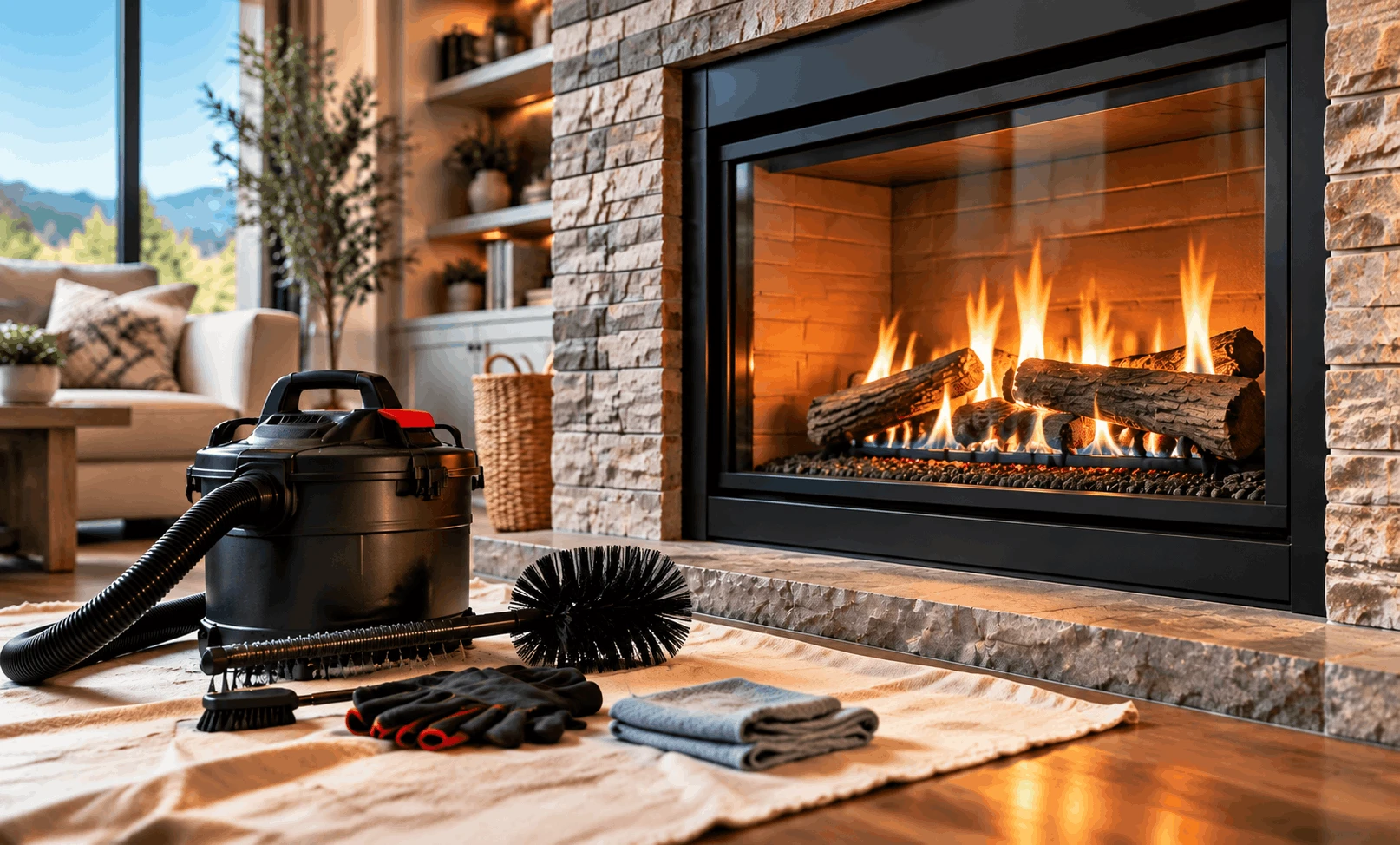
To ensure a smooth job, gather your supplies before you begin:
- To protect your floor, use an old towel or a drop cloth.
- A handheld or shop vacuum
- A stiff-bristled brush and a small fireplace shovel
- A dustpan and broom
- Mild dish soap and warm water
- Fireplace glass cleaner (or a paste of warm water and wood ash)
- Microfiber cloths and paper towels
- Gloves, eye protection, and a dust mask
How to Clean a Gas Fireplace
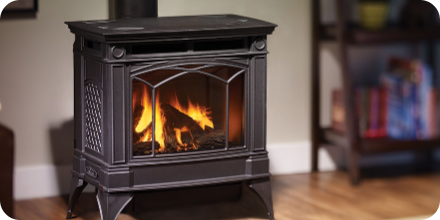
A gas fireplace gives you instant warmth without ash, but grime and a cloudy white film can still build up on the glass over time. Here is how to clean a fireplace that runs on gas:
- After turning off the pilot light and gas valve, allow the unit to cool fully.
- Clear the area around the burner, logs, and vents of any dust or debris.
- Gently dust the ceramic logs with a dry, soft brush. Note their exact positions before removing any, since correct placement matters for safe operation.
- Use a fireplace glass cleaner designed specifically for gas units to clean the glass doors. Cleaners with an ammonia base should be avoided as they may harm the coating.
- Wipe down the surround and metal trim, then reassemble everything.
If you have gas log sets, our companion guide on how to clean gas logs goes deeper into that step.
How to Clean an Electric Fireplace
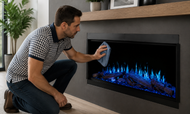
Learning how to clean electric fireplace units is the easiest job of the three, since there is no ash, soot, or combustion involved. Always unplug the fireplace or switch off the breaker first. Use a soft cloth or duster to wipe the exterior and the interior firebox, then vacuum the heater vents with a brush attachment to clear trapped dust. Wipe the glass front with a dry or barely damp microfiber cloth, and never spray liquid directly onto electrical components. A quick wipe-down every couple of weeks keeps the flame effect crisp and the heater running efficiently.
How to Clean a Wood-Burning Fireplace
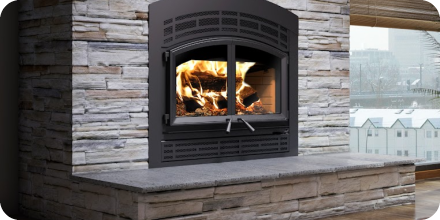
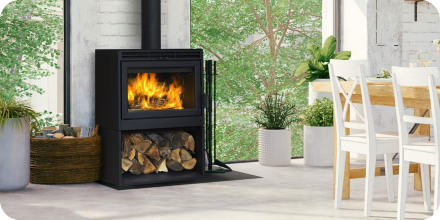
Due to the ash, soot, and creosote they produce, wood-burning fireplaces require the greatest care. This deep cleaning of a fireplace routine works well at the end of the season or any time buildup gets heavy:
- Verify that the ashes are cold and the fire is completely extinguished. After the last fire, wait at least 24 hours.
- Spread your drop cloth, then remove the grate and andirons.
- Shovel out the bulk of the ash into a metal container. Tip: In winter, leave about an inch of ash on the floor of the firebox, as it helps insulate embers and makes the next fire easier to start.
- Sweep and vacuum the remaining residue.
- Scrub the interior walls with a stiff brush and a mild dish soap solution, working from the top down.
- Before the next fire, rinse with a moist cloth and allow everything to completely dry.
For ongoing fireplace cleaning between deep cleans, a quick weekly ash removal and a glass wipe are usually enough.
Removing Soot and Creosote
Soot wipes away with a damp cloth and mild soap, but creosote is tougher and more dangerous. Light creosote can be loosened with a chimney brush, but moderate to heavy buildup is a job for a certified chimney sweep. Burning well-seasoned hardwoods such as oak, maple, and birch produces far less creosote than softwoods like pine, so your choice of firewood directly affects how much cleaning you'll face.
How to Clean Fireplace Glass
Cloudy or sooty glass is one of the most common complaints, and it is simple to fix. Make sure the glass is cool, then try this classic method: dampen a paper towel, dip it in fine white wood ash, and rub the glass in small circles. The ash is a gentle natural abrasive that cuts through haze. Wipe clean with a fresh, damp towel, then buff dry. For gas units, a dedicated fireplace glass cleaner works best. Whatever you use, never clean glass while it is hot, and avoid harsh ammonia products that can leave permanent streaks or damage protective coatings.
How to Clean a Brick Fireplace and Hearth
Brick and stone absorb soot stains over time. To clean a brick fireplace surround, mix warm water with a little dish soap and scrub gently with a soft brush. For stubborn stains, a damp pumice stone or a trisodium phosphate (TSP) solution can help, but always test a small hidden area first and rinse thoroughly. Wipe down the hearth with the same mild solution, and dry it well so no moisture lingers in the masonry.
Fireplace Maintenance Schedule
Consistency is the secret to easy upkeep. Use this simple schedule as your baseline for fireplace maintenance:
Weekly (during use): Remove excess ash from wood-burning units, dust, gas, and electric models, and wipe the glass.
Monthly: Vacuum vents and burner areas, check that smoke and carbon monoxide detectors work, and inspect the glass and gasket seals.
Annually: Schedule a professional chimney inspection and cleaning. Chimneys, fireplaces, and vents should be inspected at least once a year, according to the National Fire Protection Association (NFPA). The Chimney Safety Institute of America (CSIA) advises cleaning a flue once creosote reaches about one-eighth of an inch.
Building these habits into your routine keeps cleaning a fireplace quick rather than overwhelming, and it catches small problems before they become expensive repairs.
When to Call a Professional
DIY care handles most routine cleaning, but some tasks belong to a trained technician. Call a professional if you notice heavy creosote buildup, cracks in the chimney or firebox, a persistent gas odor, soot stains spreading onto walls, or a fireplace that simply won't draw smoke properly. An annual gas line check and chimney sweep are worth every penny for the safety they provide. Embers Living technicians are trained directly by manufacturers, so reach out to our team if you have questions about your specific unit.
Frequently Asked Questions
How Frequently Should My Fireplace Be Cleaned?
Do light cleaning weekly during the burning season, a more thorough cleaning monthly, and a full professional inspection once a year. Wood-burning units need the most frequent attention because of ash and creosote.
What is the Best Way to Clean a Fireplace?
Start cold and work top to bottom: remove ash and debris, vacuum, scrub the interior with mild soap, then clean the glass last. Matching your method to your fireplace type, gas, electric, or wood, gives the best results.
Can I Clean the Glass in My Fireplace With Vinegar?
A diluted vinegar solution can work on light haze, but the gentlest, most reliable method is a damp paper towel dipped in fine wood ash. For gas units, a purpose-made fireplace glass cleaner is safest.
Is Fireplace Ash Good for Anything?
Yes, Cooled wood ash can be composted in small amounts or sprinkled in the garden as a source of nutrients for many plants.
Keep Your Heart Ready for Every Season
A clean, well-maintained fireplace is safer, more efficient, and more inviting. With a simple weekly routine, monthly checks, and one annual professional inspection, you can enjoy your fire with complete peace of mind. If you're ready to upgrade or add a new hearth to your home, explore the gas fireplaces, electric fireplaces, and wood-burning fireplaces at Embers Living, or contact our team for expert guidance via phone at (303) 800-5659 or by email sales@embersliving.com.